
Discover how digital transformation in the food industry improves safety, traceability, and efficiency through AI, mobile apps, and real-time monitoring.
Key Takeaways
- Digital transformation in the food industry replaces paper-based HACCP logs and quality checklists with mobile apps that capture data at the source, reducing errors and improving compliance.
- Traditional paper-based inspection processes can be error-prone and inconsistent, with digital solutions reducing traceability time from days to seconds in documented cases.
- Mobile apps with offline functionality are critical for food processing facilities, warehouses, and production floors where connectivity is unreliable but HACCP monitoring cannot stop.
- The Alpha TransForm platform enables food manufacturers to digitize HACCP logs, sanitation checklists, receiving inspections, and quality audits in minutes, with patented offline technology that ensures uninterrupted compliance documentation.
What Digital Transformation Means for Food Operations
Digital transformation in the food industry goes far beyond scanning documents or moving spreadsheets online. It fundamentally changes how food businesses capture, verify, and act on critical safety and quality data across production, processing, and distribution.
True digital transformation in food operations involves replacing handwritten temperature logs with mobile apps that timestamp and verify readings. It converts paper HACCP plans into digital workflows with automatic alerts for critical control point violations, enables real-time traceability from receiving through finished goods, and creates integrated data flows that connect production floors with quality management systems.
|
Alpha TransForm: Digital Solutions to Collect, Analyze, and Act on Data Turn Paper Forms Into Mobile Apps in Minutes | No IT Team Required | Works Offline | Trusted by Manufacturing & Field Teams  Why Business Leaders Choose Alpha TransForm: ✓ Built-in custom dashboards and workflows to trigger business activity✓ Seamless integration with existing business systems ✓ Replace Excel with digital data collection and analysis ✓ Rapid digitization—build apps in days without IT bottlenecks ✓ Proven ROI with scalable start-small approach ✓ Trusted by manufacturing, construction, and healthcare leaders From Paper to Digital in 3 Steps 1. Upload your paper form or start from scratch2. Customize fields and logic as needed 3. Deploy to mobile devices and start collecting data instantly Stop losing time with paper processes. Start delivering business value today.
|
Why Food Operations Must Go Digital Now
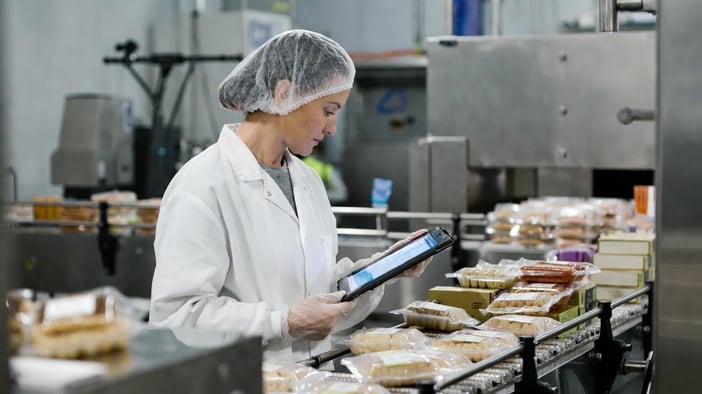
Food manufacturers invest heavily in digital transformation to meet rising food safety standards, regulatory requirements, and consumer expectations for transparency.
The food industry faces pressure from multiple directions. Regulatory bodies demand comprehensive traceability and documentation. Consumers want to know where their food comes from, how it was produced, and if it meets safety standards, making transparency no longer optional. Meanwhile, operational costs continue rising while labor becomes scarcer.
Food safety incidents carry devastating consequences. A single contamination event can result in costly recalls, permanent brand damage, and potential legal liability. Paper-based processes simply cannot provide the speed, accuracy, and accountability that modern food operations require.
Manual logs and paper inspection checklists create significant vulnerabilities:
- Data entry errors when transcribing handwritten temperature readings into systems.
- Lost documentation that leaves compliance gaps during audits.
- Delayed issue identification when problems aren't visible until end-of-shift reviews.
- Inconsistent execution of critical control point monitoring across shifts and locations.
- Limited traceability when trying to reconstruct production history during recalls.
- No real-time alerts when critical limits are exceeded.
Food processing teams conducting temperature monitoring, sanitation verification, receiving inspections, and allergen controls need digital tools that work reliably regardless of WiFi availability.
Current Trends Shaping Food Industry Digitization
Food manufacturers face complex challenges, including regulatory changes, supply chain volatility, and increased consumer scrutiny. Several transformative trends are changing how food operations approach digitization.
AI & Predictive Analytics for Food Safety
AI technologies are transforming how businesses understand data and make informed decisions. Key applications include fueling the development of novel proteins and functional foods aligned with current market demands. Food safety teams use AI to predict contamination risks by analyzing environmental sensor data, historical trends, and production patterns.
Key applications include predictive pathogen risk assessment, automated HACCP plan generation based on product specifications, supplier performance analysis to identify compliance risks, and quality trend identification.
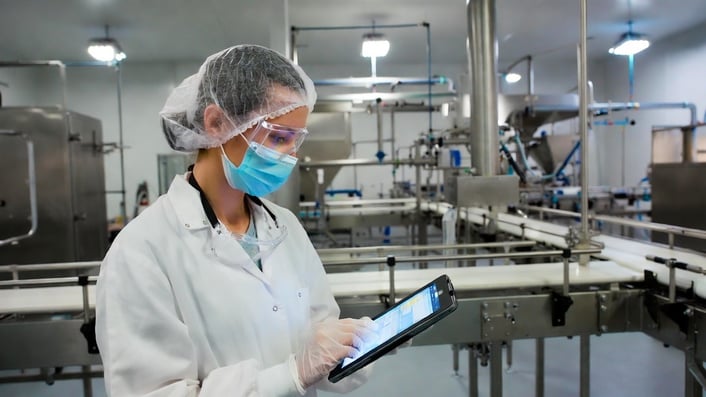
Food companies plan to invest in AI, with notable applications including improving manufacturers' ability to monitor and track food products to ensure quality and safety in near real-time.
Enhanced Traceability Requirements
Regulatory mandates require comprehensive tracking from farm to table. Technologies like blockchain, smart labels, dynamic QR codes, and geolocation systems ensure food products can be traced from source to shelf, guaranteeing authenticity and reducing fraud risks.
Digital data collection enables lot tracking with photo verification, supplier documentation at receiving, production timestamp capture throughout processing, and a complete chain of custody for regulatory compliance.
Offline-First Mobile Applications for Production Environments
Food processing facilities, cold storage warehouses, and production floors often lack reliable cellular connectivity. Production cannot stop when WiFi fails during HACCP temperature monitoring.
Patented offline technology that captures temperature readings, photos, digital signatures, and timestamps without connectivity, then syncs automatically when connectivity is restored, has become essential for food safety compliance.
Real-Time Monitoring & Digital Dashboards
Real-time data collection and analysis enable inspectors to gather critical information instantly. Built-in dashboards transform HACCP monitoring data into actionable insights, enabling quality managers to identify temperature excursions, spot sanitation issues, and verify corrective actions.
Examples of Digital Transformation in the Food Industry
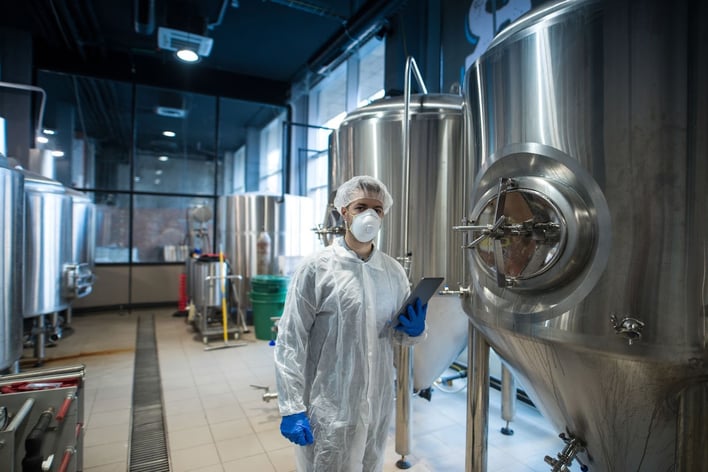
Digital technologies, including IoT sensors, mobile apps, automation, and AI, are transforming food operations from farm to table.
Digital transformation impacts every stage of food operations, from agricultural production through processing, distribution, and consumer engagement. Examples are found in:
- IoT Sensors for Temperature Monitoring.
- Mobile Apps for Quality Control & HACCP Compliance.
- Automated Production Lines with Real-Time Monitoring.
- AI-Powered Demand Forecasting.
- Blockchain for Supply Chain Traceability.
- Robotics & Automation.
- Digital Dashboards & Analytics.
Real-World Impact: Digital Transformation Success Stories
Walmart: Blockchain-Powered Food Traceability
The Challenge
In 2016, Walmart's Vice President of Food Safety asked his team to trace a package of sliced mangoes back to its source farm. Using traditional paper-based methods, the investigation took about 7 days. During foodborne illness outbreaks like the Spring 2018 romaine lettuce contamination that killed five people and hospitalized over 90, this delay proved devastating.
The Solution
Walmart partnered with IBM to create a food traceability system based on Hyperledger Fabric, enabling the company to track products from farm to store with record speed and accuracy. The blockchain solution created a shared digital ledger that allowed every participant in the supply chain to enter data through a simple web-based interface. The system was designed to be accessible to suppliers regardless of technical expertise, requiring only a smart device and an internet connection.
Results
Traceability time for mangoes in US stores dropped from 7 days to 2.2 seconds, while the pork traceability system in China allowed uploading certificates of authenticity to the blockchain, addressing credibility concerns. Walmart now traces the origin of over 25 products from multiple suppliers using this blockchain-powered system.
Coca-Cola: AI-Driven Supply Chain Transformation
The Challenge
Coca-Cola European Partners needed to enhance supply chain efficiency, improve demand forecasting accuracy, and optimize production processes across its global operations. The company faced operational inefficiencies in inventory management, production planning, and equipment maintenance that impacted service levels and costs.
The Solution
Coca-Cola implemented a comprehensive digital transformation across its commercial product supply operations, using AI-powered demand forecasting, digital twins for production optimization, and IoT integration throughout the supply chain. The system incorporated:
- Real-time data collection from IoT sensors monitoring inventory levels, production rates, and distribution logistics.
- AI-driven demand forecasting to predict consumer demand with greater accuracy.
- Virtual replicas of physical manufacturing assets that monitor and simulate production processes in real-time.
- Partner portals and mobile apps that provide channel partners with real-time access to sales data, inventory levels, and promotional materials.
- Predictive maintenance using AI.
- Digital collaboration platforms to streamline communication across supply chain partners.
Results
Demand forecast accuracy improved, enabling optimized production schedules and reduced inventory costs. Operational efficiency increased by about 15%. Equipment downtime reduced through AI-driven predictive maintenance, and service levels improved across the supply chain through better visibility and data-driven decision-making.
Why Alpha TransForm Delivers for Food Manufacturing Operations
Production teams need to document temperature monitoring, complete sanitation verification, conduct receiving inspections, and verify allergen controls, often in cold storage areas, production floors, and facilities where network connectivity proves unreliable.
Alpha TransForm addresses these operational realities with patented offline technology that keeps HACCP monitoring and quality documentation running regardless of signal strength. Your staff can complete temperature logs, sanitation checklists, and quality verifications without waiting for connectivity. Data syncs automatically when devices reconnect, ensuring compliance gaps never occur.
Alpha TransForm enables food manufacturers to digitize HACCP logs and quality workflows with offline-capable mobile apps that work reliably in production environments.
Key Capabilities for Food Safety Operations
- Complete HACCP temperature monitoring, sanitation verification, and quality inspections even in freezers, coolers, and areas with poor connectivity.
- Document sanitation conditions, product defects, packaging issues, and equipment status with visual evidence.
- Track lot codes, verify ingredients at receiving, confirm finished goods, and ensure proper rotation.
- Create verified records of when and where inspections occurred for audit trails.
- Capture accountability for critical control point monitoring, corrective actions, and supervisor approvals.
- Adapt forms based on product type, allergen presence, or process requirements, ensuring teams follow the correct procedures.
- Display temperature compliance rates, sanitation completion, inspection results, and corrective action status in real time.
- Connect with ERP systems, quality management platforms, and food safety databases.
For food manufacturers ready to eliminate paper-based food safety systems and accelerate compliance digitization, Alpha TransForm provides the mobile-first foundation that delivers measurable results.
FAQs
What is digital transformation in the food industry?
Why is digital transformation critical for food manufacturers?
What are the biggest challenges in the food industry's digital transformation?
How long does it take to see results from digital food safety systems?
How does Alpha TransForm support food manufacturing operations?
*Note: Alpha TransForm is a no-code app builder developed by Alpha Software. Product features, availability, pricing, and results referenced are for informational purposes only and subject to change; actual capabilities and outcomes may vary based on configuration and use case. To confirm current offerings and pricing, talk to a Solutions Consultant.





Comment