
Discover how digital transformation reduces costs and boosts efficiency in transportation and logistics with mobile data collection and offline-capable apps.

Key Takeaways
- Digital transformation in transportation and logistics eliminates paper-based inefficiencies, reduces operational costs by up to 30%, and accelerates decision-making through real-time data visibility.
- Mobile apps with offline capability ensure drivers, dispatchers, and field teams maintain productivity in areas without cellular coverage, preventing data loss and workflow disruptions.
- Modern logistics operations require digital tools that capture delivery confirmations, vehicle inspections, route documentation, and incident reports with GPS tagging, photo capture, and digital signatures.
- Alpha TransForm enables transportation teams to digitize dispatch forms, maintenance checklists, safety inspections, and compliance documentation in hours without IT dependencies or coding knowledge.
What Is Digital Transformation in Transportation and Logistics?
Digital transformation in transportation and logistics involves shifting from manual, paper-based processes to intelligent digital systems that streamline operations across dispatch, fleet management, delivery tracking, and compliance documentation. This transformation touches every aspect of logistics operations, from route planning and load optimization to driver communication and regulatory reporting.
Transportation companies managing fleets, coordinating deliveries, and overseeing complex supply chains face mounting pressure to reduce costs while improving service quality. Traditional clipboard-and-paper approaches create operational bottlenecks when coordinating between dispatchers, drivers, warehouse teams, and customers. Every handwritten delivery note, manually logged inspection form, and paper-based incident report introduces delay, error risk, and compliance gaps.
Companies implementing digital solutions typically experience faster delivery times, reduced fuel costs through optimized routing, improved asset utilization, and enhanced customer satisfaction through accurate tracking and communication.
|
Alpha TransForm: Digital Solutions to Collect, Analyze, and Act on Data Turn Paper Forms Into Mobile Apps in Minutes | No IT Team Required | Works Offline | Trusted by Manufacturing & Field Teams  Why Business Leaders Choose Alpha TransForm: ✓ Built-in custom dashboards and workflows to trigger business activity✓ Seamless integration with existing business systems ✓ Replace Excel with digital data collection and analysis ✓ Rapid digitization—build apps in days without IT bottlenecks ✓ Proven ROI with scalable start-small approach ✓ Trusted by manufacturing, construction, and healthcare leaders From Paper to Digital in 3 Steps 1. Upload your paper form or start from scratch2. Customize fields and logic as needed 3. Deploy to mobile devices and start collecting data instantly Stop losing time with paper processes. Start delivering business value today.
|
Why Digital Transformation Matters for Transportation Operations
Paper-based logistics operations create hidden costs that compound across every delivery, every shift, and every reporting period. Handwritten delivery receipts disappear between the truck cab and the office. Inspection checklists with illegible notes delay maintenance decisions. Incident reports lacking photographs force disputes with customers and insurers. These documentation failures expose companies to liability, compromise safety programs, and prevent managers from identifying operational improvements.

Transportation companies struggle with paper-based processes that delay critical operational decisions and create compliance risks.
The Hidden Costs of Manual Processes
Manual data entry introduces transcription errors that cascade through billing systems, inventory records, and customer communications. A transposed address delays delivery. A misread odometer reading skews fuel consumption analysis. An incomplete damage report complicates insurance claims. These errors cost money, damage customer relationships, and undermine operational efficiency.
Digital Systems Deliver Measurable Improvements
Transportation companies implementing digital transformation report significant operational gains. Automated route optimization reduces fuel consumption by eliminating unnecessary miles. Real-time GPS tracking enables dispatch adjustments when traffic or weather disrupts planned routes. Digital proof-of-delivery with photo capture and signatures resolves delivery disputes immediately rather than weeks later.
Mobile data collection eliminates the delay between field observations and management action. When a driver logs a vehicle deficiency during pre-trip inspection, maintenance receives instant notification rather than waiting for end-of-shift paperwork. When a delivery exception occurs, customer service can proactively communicate with the recipient rather than reactively responding to complaints.
Compliance documentation becomes automatic rather than burdensome. Hours-of-service logs sync directly from electronic logging devices. Driver qualification files maintain current records with automated expiration alerts. Safety training completion is automatically tracked, preventing unqualified drivers from operating equipment.
Real-World Examples of Digital Transformation Success
UPS: Route Optimization Through ORION
UPS implemented its On-Road Integrated Optimization and Navigation (ORION) system across its 55,000-driver delivery network in the United States, creating what has been described as "arguably the world's largest operations research project." The system analyzes more than 250 million address data points daily to optimize driver routes, processing variables including delivery time windows, package characteristics, traffic patterns, and customer preferences to generate efficient routes that minimize unnecessary mileage.
The results validated the investment in digital transformation. ORION reduced annual route miles by 100 million, saving 10 million gallons of fuel and eliminating 100,000 metric tons of greenhouse gas emissions each year. The financial impact proved equally substantial. As of December 2015, ORION had already saved UPS more than $320 million in cumulative costs, with full deployment expected to deliver $300–400 million in annual savings. UPS has noted that reducing just one mile per driver per day across its fleet saves approximately $50 million annually in operational costs.
Schneider National: Mobile Technology for Driver Efficiency
Schneider National, one of North America's largest truckload carriers, deployed Samsung Galaxy tablets to over 10,000 drivers to digitize dispatch communication, load documentation, and compliance tracking. The tablets, assigned to individual drivers rather than trucks, provide access to work assignments, delivery information, pay statements, and real-time communication with dispatch.
The mobile technology suite includes a "driver productivity suite" with messaging capabilities, apps that scan and automate paperwork, GPS-based tools like "Find My Trailer" to locate assigned equipment in crowded parking lots, and integration with electronic logging devices for hours-of-service compliance. The system connects with Schneider's back-office planning system, enabling real-time monitoring of truck data to improve performance, safety, and compliance.
The digital transformation reduced the administrative burden of manual paperwork that previously consumed significant driver time. Beyond productivity improvements, the new tablet-based solution reduced technology costs by approximately 25% compared to Schneider's previous proprietary hardware system, while eliminating vendor dependencies and enabling the company to rapidly develop and deploy custom applications tailored to driver needs.

Modern logistics teams leverage mobile apps for dispatch coordination, vehicle inspections, delivery documentation, and compliance tracking across distributed operations.
How Digital Transformation Reduces Transportation Expenses
Fuel & Route Optimization Savings
Route optimization algorithms eliminate unnecessary miles, with best-in-class implementations reducing total miles driven. For a 100-truck fleet averaging 100,000 miles annually at 7 MPG, a 10% reduction in mileage saves approximately 142,857 gallons of fuel.
Digital systems monitor and reduce unnecessary engine idling, which consumes 0.8 gallons per hour and generates no revenue. Companies implementing idle-reduction protocols typically reduce idle time by 30–40%, saving $2,000–3,500 per vehicle annually.
Administrative & Labor Cost Reductions
Transportation companies incur significant expenses per delivery on manual data entry, transcription, and reconciliation of paper delivery receipts. Digital capture eliminates this administrative overhead entirely, generating substantial annual savings for companies processing high volumes of deliveries.
Digital dispatch systems enable a single dispatcher to coordinate more vehicles than manual processes allow, reducing labor costs by 35–45% while improving response times to route changes and customer requests.
Maintenance & Asset Utilization Improvements
Digital inspection apps capture vehicle deficiencies before they cause roadside breakdowns. Early detection reduces catastrophic failure rates, saving costs per avoided breakdown in towing, emergency repairs, and load recovery costs.
Real-time visibility into vehicle location and availability increases asset utilization. For companies with high capital costs per vehicle ($150,000-180,000 per tractor), improved utilization delays new equipment purchases, deferring capital expenditures.
Insurance & Risk Management Savings
Carriers implementing telematics and driver safety programs typically achieve insurance premium reductions.
Digital incident documentation with photos, GPS data, and timestamps reduces claim settlement costs through faster resolution and reduced fraud exposure.
Compliance & Penalty Avoidance
Electronic logging devices reduce Hours of Service violations, preventing fines.
Automated tracking of license expiration, medical certification, and training requirements prevents out-of-qualification violations that carry penalties.
Alpha TransForm for Transportation Excellence
We designed Alpha TransForm to address the practical realities of logistics fieldwork, where drivers and dispatchers operate in challenging conditions that demand reliable data capture regardless of connectivity or environment. Our no-code platform enables operations managers to digitize existing dispatch forms, inspection checklists, delivery confirmations, and safety reports in hours.
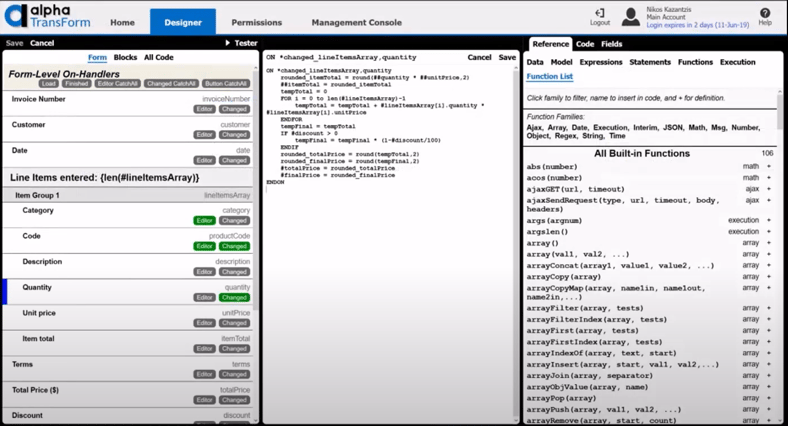
No-code platforms empower logistics teams to build custom mobile apps without waiting on IT or external developers.
Proven Offline Performance in the Field
Transportation operations frequently occur in areas with unreliable or nonexistent cellular coverage. Warehouses with metal construction block signals. Rural delivery routes lack network infrastructure. Underground parking facilities prevent connectivity. Alpha TransForm's offline-first architecture ensures field apps function completely without internet access.
Drivers capture delivery confirmations, photograph cargo condition, scan package barcodes, record GPS coordinates, collect recipient signatures, and document delivery exceptions while completely disconnected from networks. Data synchronizes automatically when connectivity returns.
Build Transportation Apps Rapidly
Operations managers and dispatch coordinators create custom data collection apps for delivery documentation, pre-trip inspections, fuel purchase logs, incident reports, and driver check-ins without coding expertise. Upload existing paper forms, add GPS requirements, configure barcode scanning, define photo documentation needs, and deploy to driver smartphones and tablets in hours.
Transportation-Specific Capabilities
Alpha TransForm includes features that address unique logistics requirements, including speech-to-text, stopwatch functions, large media storage, SMS and email notifications, conditional logic, and automatic calculations.
Integration with Transportation Systems
Alpha TransForm connects directly with transportation management systems, allowing field data to flow seamlessly into dispatch, billing, and customer service workflows. Integration with GPS fleet tracking platforms correlates delivery documentation with vehicle location history. Connections to maintenance systems automatically generate work orders from reported vehicle deficiencies.
FAQs
What operational areas benefit most from digital transformation in transportation?
How do mobile apps function when drivers operate in areas without cellular coverage?
Can transportation companies build custom apps without IT departments?
How quickly can logistics teams implement digital transformation solutions?
Why do transportation companies choose Alpha TransForm over other platforms?
*Note: Alpha TransForm is a no-code app builder developed by Alpha Software. Product features, availability, pricing, and results referenced are for informational purposes only and subject to change; actual capabilities and outcomes may vary based on configuration and use case. To confirm current offerings and pricing, talk to a Solutions Consultant.






Comment