
Find cargo hold inspection checklist templates, downloadable PDFs from public institutions, and software tools like Alpha TransForm to automate inspections.

Key Takeaways
- A cargo hold inspection checklist typically covers structural integrity, cleanliness, condition of hatch covers, drainage, and watertightness before loading.
- Several government and classification bodies offer free downloadable PDF checklists that can serve as starting templates for your operations.
- Paper-based inspection workflows create data gaps, reporting delays, and compliance risks that digital tools can eliminate.
- Top automation options include Alpha TransForm, SafetyCulture, and Fulcrum, all offering offline data capture, photo documentation, and digital reporting.
- Alpha TransForm lets operations teams digitize any cargo hold inspection form into a mobile app in minutes, with no IT support required.
Choosing the Right Option for Your Cargo Hold Inspections
A cargo hold inspection checklist verifies that a vessel's holds are clean, structurally sound, and safe before loading begins. Standard checklists cover cleanliness and residue removal, hatch cover and gasket condition, structural integrity, drainage and bilge systems, ventilation, and documentation sign-off.
Several public institutions offer free downloadable PDF templates that operations teams can adapt. The U.S. Transportation Command, U.S. Coast Guard, and Indian Register of Shipping each publish checklists covering containerized cargo, hazardous materials, and bulk carrier surveys. For teams looking to move beyond paper, digital inspection platforms like Alpha TransForm, SafetyCulture, and Fulcrum offer offline data capture, photo documentation, and automated reporting.
|
Alpha TransForm: Digital Solutions to Collect, Analyze, and Act on Data Turn Paper Forms Into Mobile Apps in Minutes | No IT Team Required | Works Offline | Trusted by Manufacturing & Field Teams  Why Business Leaders Choose Alpha TransForm: ✓ Built-in custom dashboards and workflows to trigger business activity✓ Seamless integration with existing business systems ✓ Replace Excel with digital data collection and analysis ✓ Rapid digitization—build apps in days without IT bottlenecks ✓ Proven ROI with scalable start-small approach ✓ Trusted by manufacturing, construction, and healthcare leaders From Paper to Digital in 3 Steps 1. Upload your paper form or start from scratch2. Customize fields and logic as needed 3. Deploy to mobile devices and start collecting data instantly Stop losing time with paper processes. Start delivering business value today.
|
What a Typical Cargo Hold Inspection Checklist Covers

A cargo hold inspection checklist ensures vessel holds are clean, structurally sound, and safe before loading begins.
A cargo hold inspection checklist is designed to confirm that a vessel's holds are clean, structurally sound, and safe for the next cargo before loading begins. While the exact items vary by vessel type and cargo, most checklists share a common structure and cover the following areas:
- Cleanliness and residue removal: Holds are swept to remove residue from previous cargo, loose rust, scale, and paint flakes that could contaminate the incoming shipment.
- Hatch cover and gasket condition: Inspectors check hatch covers and rubber gaskets for damage, corrosion, and proper sealing to prevent water ingress during transit.
- Structural integrity: Tank top plating, frames, side shells, and other structural elements are examined for cracks, deformation, or excessive corrosion.
- Drainage and bilge systems: Drainage wells and pumping arrangements are tested to confirm proper operation. If applicable, bilge coats or hold blocks are applied to protect the ship's steel and bilge lines.
- Ventilation and atmosphere testing: Ventilation systems are confirmed operational, and gas detection equipment is checked for availability and calibration, particularly when the previous cargo may have left residual fumes.
- Documentation and sign-off: The completed checklist is signed off with supporting documentation, including photographs, to create an auditable record for classification societies and port authorities.
Downloadable PDF Templates From Public Institutions
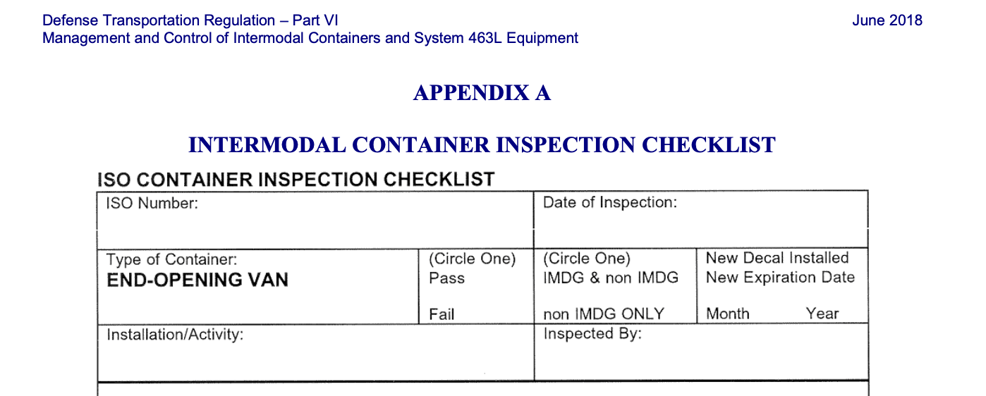
Government bodies like USTRANSCOM and the U.S. Coast Guard publish downloadable inspection checklist templates for containerized cargo operations.
Several government bodies and classification organizations publish inspection checklists that operations teams can download and adapt for their own use.
The U.S. Transportation Command (USTRANSCOM) Intermodal Container Inspection Checklist is a comprehensive PDF that covers end-opening vans, side-opening vans, open top containers, flatracks, ISO tactical shelters, and ISO mobile facilities, making it a useful reference for any team handling containerized cargo.
For hazardous materials and regulatory inspections, the U.S. Coast Guard CG-5577 Intermodal Container Inspection Form provides a detailed framework that aligns with both 49 CFR and International Maritime Dangerous Goods (IMDG) requirements. Teams working with bulk carriers can reference the Indian Register of Shipping (IRClass) General Examination Checklist for Bulk Carriers, which covers cargo hold structural surveys, hatch cover maintenance, and inspection requirements applicable across annual, intermediate, and special survey cycles.
Automation Options: Software That Replaces Paper Checklists
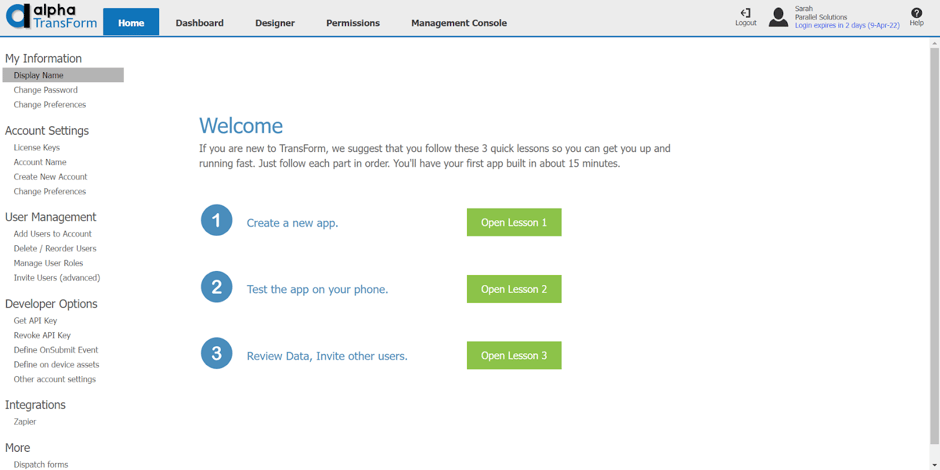
Alpha TransForm is a digital platforms that replace paper checklists for field inspections.
Switching from PDF templates to a digital inspection platform eliminates the delays, data gaps, and compliance risks that come with paper-based workflows. The following tools are designed for operations teams that need to capture inspection data in the field and act on it immediately.
1. Alpha TransForm
Alpha TransForm is a no-code platform we designed for business users who need to digitize paper forms fast, without waiting on IT. We help operations teams turn any cargo hold inspection checklist into a fully functional mobile app in minutes.
Our apps work offline in environments with unreliable connectivity. Inspectors can capture photos, scan barcodes, record GPS coordinates, collect digital signatures, and use conditional logic to guide their workflow. Once the device reconnects, all data syncs automatically.
We integrate with existing business systems, so inspection data flows directly into the platforms your team already uses. Alpha TransForm is priced at $30 per user per month, and teams can explore our free Equipment Inspection App template as a starting point.
2. SafetyCulture
SafetyCulture (formerly iAuditor) has a library of pre-built inspection templates, including several for maritime cargo and ISO container inspections. The platform supports offline data capture, photo documentation, and automated report generation.
It is well-suited for organizations that want a ready-made template library and a straightforward checklist interface. SafetyCulture's Premium plan starts at $24 per user per month when billed annually.
3. Fulcrum
Fulcrum is a field data-collection platform with strong GIS and location-intelligence capabilities. It supports offline inspections, photo capture, and conditional logic, and integrates with mapping tools like Esri ArcGIS.
Fulcrum is a good fit for teams that need geo-referenced inspection data, though its advanced report customization requires some HTML knowledge, and its pricing can be steep for smaller organizations. Fulcrum's Professional plan starts at $43 per user per month when billed annually, with a minimum of 5 users.
Cargo Hold Inspection Software: At-a-Glance Comparison
|
Feature |
Alpha TransForm |
SafetyCulture |
Fulcrum |
|
Starting Price |
$30/user/month |
$24/user/month (annual) |
$43/user/month (annual) |
|
Offline Capability |
Offline-first architecture built for demanding environments |
Offline mode with sync on reconnection |
Offline data collection with auto-sync |
|
Form Builder |
No-code; business users build and deploy apps without IT |
Template library with customizable checklist editor |
Drag-and-drop builder; report customization requires HTML |
|
Data Capture Features |
Photos, barcodes, GPS, timestamps, signatures, conditional logic, speech-to-text |
Photos, annotations, signatures, scheduled inspections |
Photos, GPS/GIS mapping, signatures, AI-powered FastFill |
|
Dashboards & Reporting |
Built-in custom dashboards with automatic alerts and workflow triggers |
Standard analytics on free plan; custom dashboards on paid tiers |
Map-based data views; PDF reports via HTML templates |
|
Integrations |
SQL and existing business systems |
Integrations via API and third-party connectors |
Esri ArcGIS, webhooks, API, and GIS platforms |
Why Choose Alpha TransForm for Cargo Hold Inspections
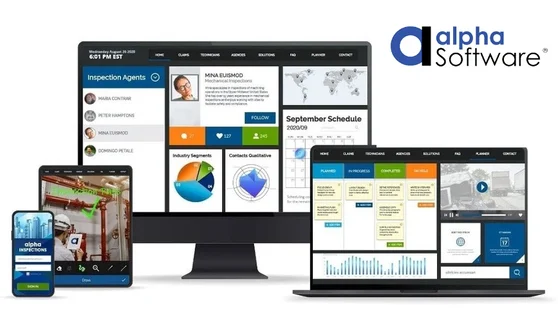 Alpha TransForm lets operations teams digitize paper inspection checklists into mobile apps that run offline without coding or IT support.
We built Alpha TransForm for the reality of field operations: unreliable connectivity, time pressure, and teams that need to move fast without waiting on developers. Our no-code platform lets any operations manager or inspector upload an existing paper checklist and turn it into a mobile app the same day. There is no long IT project, no training curve, and no disruption to your existing workflows.
We integrate seamlessly with the business systems you already rely on, so inspection data doesn't sit in a silo. Our approach is simple: start small, digitize a few forms, prove the ROI, and scale from there. Stop losing time and data to paper processes, and start delivering results today.
FAQs
How often should cargo hold inspections be performed?
Can a digital inspection app replace a paper checklist on a vessel?
What should you do if a cargo hold fails inspection?
How does Alpha TransForm support cargo hold inspections?
*Note: Alpha TransForm is a no-code app builder developed by Alpha Software. Product features, availability, pricing, and results referenced are for informational purposes only and subject to change; actual capabilities and outcomes may vary based on configuration and use case. To confirm current offerings and pricing, talk to a Solutions Consultant.






Comment