
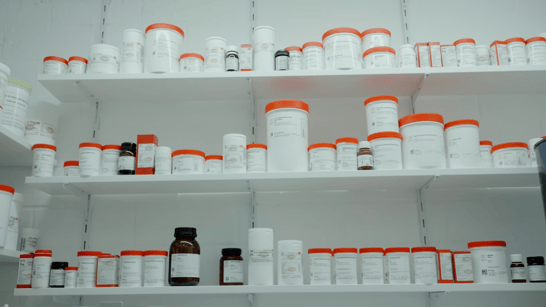
Download free medication administration checklist templates. Learn how to reduce med errors and ensure compliance with digital documentation tools.
Key Takeaways
- Medication administration checklists help healthcare facilities eliminate dosing errors, missed medications, and documentation gaps.
- Paper-based med logs create risks, including illegible handwriting, lost forms, audit trail gaps, and delayed reporting of adverse reactions, problems solved by the right digital solutions.
- Effective medication checklists include patient identifiers, drug details, administration times, provider signatures, allergy alerts, and space for documenting patient responses or complications.
- Digitizing medication forms with Alpha TransForm transforms paper checklists into mobile apps in hours, works offline in areas with weak connectivity, and syncs automatically with EHR (Electronic Health Record) systems when networks return.
*Disclaimer: This article is for informational purposes only and does not constitute medical advice. Medication administration procedures should always follow your facility's protocols, physician orders, and applicable healthcare regulations. For specific medical questions or guidance, consult with qualified healthcare professionals.
Why Medication Administration Checklists Matter in Healthcare
Healthcare operations leaders face mounting pressure to eliminate medication errors while managing costs and compliance. One missed checkbox or illegible signature can trigger Joint Commission citations, malpractice claims, and patient harm—yet many facilities still rely on paper logs that create unnecessary risk.
Medication administration checklists create a structured verification system that catches errors before they reach patients. They enforce the five rights of medication administration: right patient, right drug, right dose, right route, right time, while providing a complete audit trail for regulatory compliance and quality improvement reviews.
Paper logs introduce unnecessary risk. Handwritten entries get lost, damaged by spills, or become illegible under time pressure. Staff forget to initial doses, skip allergy checks, or document late after the fact from memory.
During shift changes, incomplete paper records leave incoming nurses guessing about what was actually administered, and these gaps don't just create compliance headaches—they directly threaten patient safety.
|
Alpha TransForm: Digital Solutions to Collect, Analyze, and Act on Data Turn Paper Forms Into Mobile Apps in Minutes | No IT Team Required | Works Offline | Trusted by Manufacturing & Field Teams  Why Business Leaders Choose Alpha TransForm: ✓ Built-in custom dashboards and workflows to trigger business activity✓ Seamless integration with existing business systems ✓ Replace Excel with digital data collection and analysis ✓ Rapid digitization—build apps in days without IT bottlenecks ✓ Proven ROI with scalable start-small approach ✓ Trusted by manufacturing, construction, and healthcare leaders From Paper to Digital in 3 Steps 1. Upload your paper form or start from scratch2. Customize fields and logic as needed 3. Deploy to mobile devices and start collecting data instantly Stop losing time with paper processes. Start delivering business value today.
|
What Makes Medication Checklists Reduce Errors and Ensure Compliance
 Effective medication checklists balance thoroughness with usability. Complex forms slow down nurses during critical moments, while missing fields create compliance gaps. The best checklists include these core elements:
Patient Verification Section
- Full name and date of birth
- Medical record number
- Room and bed assignment
- Known allergies are prominently displayed
- Weight (for weight-based dosing)
Effective medication checklists include patient verification, dosage details, administration
documentation, safety checks, and follow-up observations to ensure accuracy and compliance.
Medication Details
- Generic and brand names
- Dosage amount and concentration
- Administration route (oral, IV, subcutaneous, topical, etc.)
- Scheduled administration time
- PRN (as-needed) conditions, if applicable
Administration Documentation
- Provider name or initials
- Actual administration time
- Method of verification used
- Patient response or refusal
- Witnessed by (for controlled substances)
Safety Checks
- Expiration date verification
- Double-check confirmation for high-risk medications
- Allergy screening performed
- Patient education provided
Follow-up Observations
- Adverse reactions or side effects
- Effectiveness assessment
- Next scheduled dose
- Special instructions or physician orders
Digital versions add automatic timestamp validation, mandatory field completion before submission, and photo documentation capabilities that paper forms cannot match.
Templates & Examples of Medication Administration Checklists
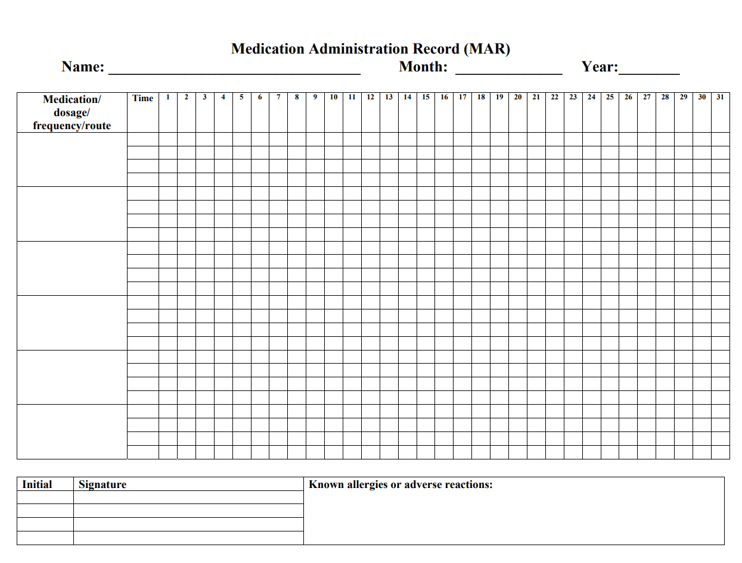 Washington County Medication Administration Record (MAR)
Washington County provides a free Medication Administration Record template that tracks medication administration across an entire month, with space to list medication names, dosages, routes, and scheduled times for up to 31 days.
The template includes sections for PRN (as-needed) medications, vital sign monitoring with fields for recording blood pressure, temperature, pulse, and weight, along with known allergies or adverse reactions.
North Carolina DHHS Medication Administration Clinical Skills Checklist
The North Carolina Department of Health and Human Services provides a comprehensive Medication Administration Skills Validation Form that includes sections for the six rights of medication administration.
These 9nclude residents' rights, medication resources, vital signs monitoring, and various administration routes, including oral medications, sublingual medications, oral inhalers, eye drops, ear drops, nasal sprays, nebulizers, and injections.
Free medication checklist templates help track administration with customizable
fields for dosages, schedules, and compliance monitoring.
Family Caregivers Online Medication Log Templates
Family Caregivers Online offers free medication log and medication list templates available in both PDF versions for printing and hand-entering information, and in editable Microsoft Word versions that can be modified to fit individual needs.
These templates are specifically designed for caregivers to track their loved ones' medications.
How Healthcare Teams Implement Error-Free Medication Documentation
Preparation Phase
Review physician orders before each shift, cross-referencing medication lists against active prescriptions in the patient chart. Gather all medications, verify expiration dates, and prepare administration supplies.
Check the patient's most recent vital signs and lab results to confirm that medications remain appropriate; hold doses if parameters fall outside safe ranges; and notify the prescribing physician.
Verification Steps
Nursing staff should approach patients with medications and checklists. Verify patient identity using two independent identifiers, comparing against the patient wristband and medication order. Never rely on room numbers alone, as patients frequently move between beds.
Check the medication label against the order three times: when removing it from storage, before preparing the dose, and immediately before administration.
Documentation Requirements
Record administration details immediately; never document in advance or hours after the fact. Include the exact time given, any deviations from standard protocol, and patient responses.
If a patient refuses medication, document the refusal, the reason given, and the physician notification.
Communication Protocols
Report medication errors, near misses, or adverse reactions through your facility's incident reporting system immediately. Document thoroughly but factually—focus on what happened and actions taken rather than assigning blame.
Alert the incoming shift during handoff about pending doses, recent PRN administrations, or medications requiring special monitoring.
Avoid Paper Template Pitfalls With Alpha TransForm
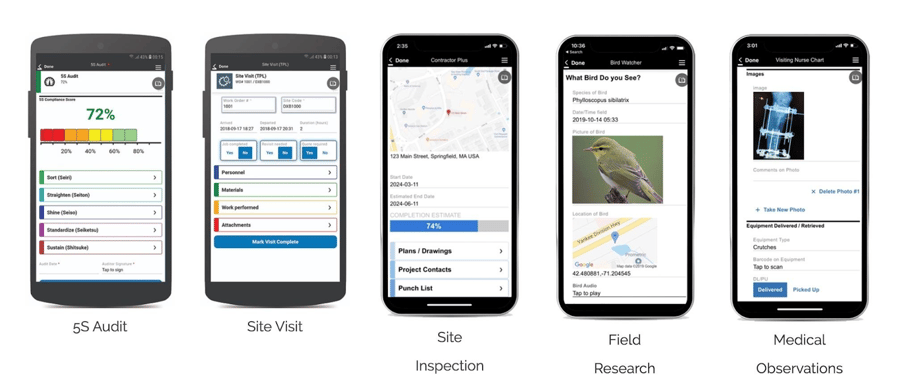
Healthcare facilities committed to patient safety eventually outgrow paper forms and static PDFs. That’s why we have designed Alpha TransForm to address the fundamental problems that templates cannot solve.
Paper checklists disappear during busy shifts, get damaged by liquids, and require manual entry into permanent records, creating multiple opportunities for errors. Digital forms built with Alpha TransForm stay accessible on every device, protect data even during device failures through automatic backups, and sync directly with your EHR without double documentation.
Alpha TransForm eliminates paper limitations with offline mobile apps that enforce safety protocols and sync with hospital systems.
Templates cannot warn you when a documented time falls outside the ordered schedule, flag potential drug interactions based on other medications in the patient's record, or require allergy screening before allowing submission. Alpha TransForm apps include conditional logic that automatically enforces your facility's safety protocols, preventing incomplete or inaccurate documentation from being entered into the record.
Our platform works everywhere your staff does, including areas with no Internet connection, ensuring reliability. Data syncs automatically when devices reconnect, ensuring eventual consistency.
Healthcare organizations using Alpha TransForm can also digitize related workflows on the same platform: patient intake assessments, vital signs documentation, incident reports, equipment maintenance logs, and facility inspection checklists. This eliminates the software sprawl that creates training burdens and integration headaches.
Frequently Asked Questions (FAQs)
What information must be included on a medication administration checklist?
Every medication administration checklist should capture patient identifiers (name, date of birth, medical record number), complete medication details (name, dose, route, time), verify administration (provider signature, actual time given), and document patient response.
Include allergy alerts prominently and provide space for documenting refusals or adverse reactions.
How do digital medication checklists reduce errors compared to paper forms?
Digital checklists eliminate illegible handwriting, prevent incomplete submissions through required-field validation, and trigger real-time alerts for potential issues such as allergy conflicts or scheduling errors.
They create tamper-proof audit trails with automatic timestamps, reduce transcription errors by syncing directly with pharmacy and EHR systems, and provide supervisors with immediate visibility into missed or delayed doses.
Paper forms offer none of these safeguards and are frequently lost, damaged, or completed from memory hours after medication events.
Can medication administration apps work without internet connectivity?
This depends entirely on the platform architecture. Alpha TransForm uses patented offline-first technology that ensures full functionality regardless of network availability.
Cloud-only platforms fail without internet access, forcing staff back to paper workarounds that defeat the purpose of digitization.
How quickly can healthcare facilities implement digital medication checklists?
Deployment speed varies dramatically by platform. Traditional software implementations require months of vendor configuration, IT involvement, and extensive training programs.
Alpha TransForm takes an entirely different approach. Business users can build custom medication administration apps in hours using existing paper forms as templates, deploy to staff devices immediately, and train floor nurses in minutes because the interfaces match familiar workflows.
Why should healthcare facilities choose Alpha TransForm for medication administration?
Alpha TransForm solves the core problems that make paper medication logs dangerous: offline reliability ensures documentation continues in dead zones, healthcare teams build and modify apps without IT bottlenecks, and integration with existing EHR systems eliminates double documentation.
Our app builder’s proven healthcare features—photo capture for documenting injection sites, digital signatures for controlled substance verification, barcode scanning for patient identification, and GPS timestamps for tamper-proof records—were built specifically for clinical environments.






Comment