
Discover how digital transformation in HRM boosts efficiency and employee experience. Explore case studies, examples & step-by-step strategies.

Key Takeaways
- Digital transformation in HRM replaces manual, paper-based workflows with automated, self-service processes that improve efficiency and reduce errors.
- Organizations that digitize HR processes see faster hiring, better employee experiences, and data-driven decision-making across the entire talent lifecycle.
- A structured transformation strategy—assessing needs, defining outcomes, piloting, and scaling—delivers measurable results without overwhelming HR teams.
- Offline-capable tools are essential for organizations with field workers, remote locations, or facilities with unreliable connectivity.
- Alpha TransForm enables HR and operations teams to digitize forms, automate workflows, and collect data anywhere, without IT bottlenecks or coding expertise.
Why HR Digital Transformation Matters Now
Managing human resources has never been more complex. HR teams juggle recruitment pipelines, onboarding processes, performance tracking, compliance documentation, and employee communications, often using disconnected spreadsheets, paper forms, and email chains.
This fragmented approach creates bottlenecks. Forms get lost. Data entry errors multiply. Employees wait days for simple requests. HR staff spend more time on administrative tasks than on strategic work such as talent development and workforce planning.
Digital transformation in HRM solves these problems by connecting processes, automating routine tasks, and putting actionable data at leaders' fingertips. For organizations ready to modernize, the payoff is significant: reduced costs, faster service delivery, and happier employees.
|
Alpha TransForm: Digital Solutions to Collect, Analyze, and Act on Data Turn Paper Forms Into Mobile Apps in Minutes | No IT Team Required | Works Offline | Trusted by Manufacturing & Field Teams  Why Business Leaders Choose Alpha TransForm: ✓ Built-in custom dashboards and workflows to trigger business activity✓ Seamless integration with existing business systems ✓ Replace Excel with digital data collection and analysis ✓ Rapid digitization—build apps in days without IT bottlenecks ✓ Proven ROI with scalable start-small approach ✓ Trusted by manufacturing, construction, and healthcare leaders From Paper to Digital in 3 Steps 1. Upload your paper form or start from scratch2. Customize fields and logic as needed 3. Deploy to mobile devices and start collecting data instantly Stop losing time with paper processes. Start delivering business value today.
|
What is Digital Transformation in HRM?

Digital transformation in HRM means replacing manual, paper-based workflows with automated, mobile-accessible processes that connect data across the employee journey.
Digital transformation in HRM is the end-to-end redesign of HR processes using modern technologies. It goes beyond simply scanning paper forms into PDFs; it means rethinking how work gets done.
At its core, HR digital transformation means:
- Replacing manual, paper-based workflows with automated, mobile-accessible processes.
- Connecting HR data across recruitment, onboarding, performance, and engagement to help leaders spot patterns and act on insights.
- Using technologies like no-code platforms, mobile apps, and integrations to make HR services as intuitive as the consumer apps employees use daily.
The shift touches every stage of the employee journey. Traditional HR relies on email resumes, paper forms, annual review cycles, and spreadsheet tracking. Digitally transformed HR uses online portals, automated pipelines, continuous feedback tools, and real-time dashboards.
Business Benefits of HR Digital Transformation
When done well, digital transformation in HRM produces measurable business outcomes. Organizations typically see gains across efficiency, employee experience, and decision quality.
Efficiency & cost savings: Workflow automation, self-service portals, and integrated systems reduce manual data entry, errors, and duplicate work. HR teams reclaim hours previously spent chasing approvals and updating spreadsheets.
Faster hiring & onboarding: Digital recruitment pipelines, e-signatures, and structured onboarding portals reduce time-to-hire. New employees become more productive sooner when they receive guided digital journeys rather than scattered paper packets.
Better employee experience: Accessible HR services, transparent processes, and continuous feedback tools improve engagement and retention. Employees appreciate self-service options that don't require waiting for HR to process requests.
Data-driven decisions: Centralized HR data combined with analytics tools allows leaders to monitor turnover, track performance trends, and identify skill gaps. Instead of relying on gut instinct, HR becomes a strategic partner with real insights.
Case Study: Fast Mirror & Continuous Feedback
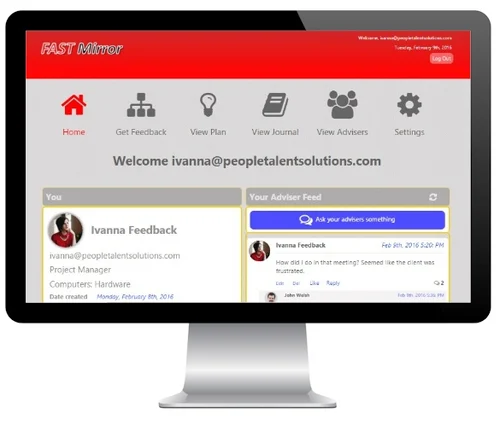
Fast Mirror, built on the Alpha TransForm platform, transforms performance management into an ongoing, employee-driven feedback experience.
A clear example of HR digital transformation is the Fast Mirror human resources app built using Alpha TransForm. Fast Mirror was designed to help employees get actionable feedback and create development plans without relying on cumbersome annual reviews.
The challenge: Traditional performance review processes were slow, infrequent, and often failed to give employees the targeted feedback needed for growth. HR teams spent substantial time administering the process rather than focusing on strategic talent development.
The solution: Using Alpha TransForm, founder John Azzara developed a cloud-based application that allows employees to request feedback from colleagues, analyze responses, and generate personalized development plans. Working independently, Azzara built the complete SaaS solution, finishing in half the time it would have taken with competing platforms.
The outcome: Fast Mirror transformed performance management into an ongoing, employee-driven experience instead of a once-a-year administrative event.
Practical HR Digital Transformation Examples
Beyond continuous feedback, digital transformation in HRM spans a range of use cases where no-code apps play a central role.
Unified HR self-service portals: Companies replace email-based requests with portals where employees can submit leave requests, update personal data, access policies, and track approvals. This reduces HR ticket volume and gives employees instant answers.
Digital onboarding journeys: New hires receive access to a guided portal with tasks, documents, training, and introductions tailored to their role. This improves the first-day experience and reduces administrative overhead for HR staff.
Mobile data collection for field teams: Organizations with workers in manufacturing plants, construction sites, or remote locations need HR tools that work offline. Digital forms for safety certifications, equipment training logs, and compliance checklists keep data flowing even without connectivity.
Automated compliance tracking: HR teams use digital workflows to track certifications, required training completion, and policy acknowledgments. Automatic alerts notify managers when renewals are due, reducing compliance risk.
Step-by-Step HR Digital Transformation Strategy

Digital transformation succeeds when it follows a structured strategy that aligns people, processes, and technology through clear stages.
Digital transformation succeeds when it follows a structured strategy rather than isolated tool deployments. A practical approach moves through clear stages that align people, processes, and technology.
Step 1: Assess & prioritize HR processes: Conduct a structured audit of HR activities, including recruitment, onboarding, performance, learning, and HR service delivery. Map current tools, touchpoints, and bottlenecks. Identify high-impact areas where manual work, delays, or poor employee experience are most costly.
Step 2: Define outcomes & KPIs: Translate transformation goals into measurable outcomes: reducing time-to-hire, cutting HR ticket volumes, improving onboarding completion rates, or raising engagement scores. Establish baseline metrics so each digital initiative can be evaluated for impact.
Step 3: Select enabling platforms & tools: Choose technologies that are cloud-based, secure, integrative, and accessible to both IT teams and HR professionals. Prioritize platforms that work offline for organizations with field workers or unreliable connectivity.
Step 4: Redesign processes, then digitize: Start by designing the ideal employee journey or HR workflow on paper. Clarify what should happen, when, and for whom—instead of simply copying old processes into new tools. Then translate these improved workflows into applications.
Step 5: Pilot, iterate & scale: Launch a pilot version with a specific department or location. Collect feedback from HR staff, managers, and employees. Refine the experience based on real usage. Once the pilot meets performance and satisfaction goals, roll it out more broadly.
Why Alpha TransForm Powers HR Digital Transformation
Alpha TransForm enables HR teams to digitize paper forms into mobile apps that work offline and integrate with existing systems.
HR teams need technology that adapts to their unique operational requirements, not rigid software that forces workarounds. Alpha TransForm delivers the flexibility, speed, and reliability that modern HR operations demand.
Key capabilities include:
- Digitize paper forms in minutes: Turn existing paper processes, employee intake forms, training checklists, compliance acknowledgments, and performance evaluations into mobile apps without coding expertise. Operations managers and HR leaders can build exactly what they need without waiting on IT.
- Work anywhere, even offline: Alpha TransForm's patented offline-first technology keeps everything running during site visits, field training, or connectivity outages. Collect data reliably, then sync automatically when the connection returns. This matters for organizations with manufacturing floors, remote facilities, or distributed workforces.
- Integrate with existing systems: Connect HR apps to databases, HRIS platforms, and business systems via powerful APIs. Layer modern experiences on top of current infrastructure without a full rip-and-replace.
- Capture rich data: Go beyond simple text fields with photo capture, signatures, timestamps, GPS location, barcode scanning, and conditional logic. Build forms that adapt based on responses and trigger alerts when action is needed.
- See results fast: Alpha TransForm users typically see ROI within weeks due to the immediate digitization of existing processes and the elimination of manual coordination tasks. Start small, prove value, and scale as needs grow.
For HR and operations leaders ready to move from paper chaos to digital clarity, Alpha TransForm provides the foundation to build custom solutions that fit your organization's culture and workflows.
FAQs
What makes digital transformation in HRM different from simply using HR software?
How long does HR digital transformation take to implement?
What are the biggest challenges in HR digital transformation?
Do HR digital transformation tools work reliably without internet connectivity?
Why should organizations choose Alpha TransForm for HR digital transformation?
*Note: Alpha TransForm is a no-code app builder developed by Alpha Software. Product features, availability, pricing, and results referenced are for informational purposes only and subject to change; actual capabilities and outcomes may vary based on configuration and use case. To confirm current offerings and pricing, talk to a Solutions Consultant.






Comment