
Learn about the top tools for digitizing supply chain processes, from mobile inspections to warehouse management, with examples and what each platform does.

Key Takeaways
- Digitizing supply chain processes replaces slow, error-prone paper workflows with mobile data collection that delivers real-time visibility across operations.
- Quality inspections, equipment checks, inventory management, and compliance audits are among the highest-impact supply chain processes to digitize first.
- Alpha TransForm, GoCanvas, and Oracle WMS are three tools for supply chain digitization, each covering field data capture, simple form workflows, and enterprise warehouse management.
- Offline capability is a critical requirement for supply chain tools used in warehouses, manufacturing floors, and remote field environments with inconsistent connectivity.
- Alpha Software's Alpha TransForm helps manufacturing and field operations teams digitize supply chain workflows in days, with no IT team or coding required.
Digitizing Supply Chain Processes: What to Know & Where to Start
Paper-based workflows at critical supply chain touchpoints, such as receiving logs, inspections, and compliance forms, create data gaps, slow decisions, and leave teams working from outdated information. Digitizing these processes means capturing data at the source on mobile devices, routing it in real time to the right systems, and giving operations leaders the visibility to act before problems escalate.
The supply chain processes with the highest digitization ROI include receiving and inventory management, quality inspections and compliance audits, and equipment checks and field service. Here, we compare three tools across those use cases: Alpha TransForm, a no-code, offline-first app builder for operations teams; GoCanvas, a mobile forms platform for simple standalone workflows; and Oracle WMS, an enterprise system for high-volume warehouse inventory control.
|
Alpha TransForm: Digital Solutions to Collect, Analyze, and Act on Data Turn Paper Forms Into Mobile Apps in Minutes | No IT Team Required | Works Offline | Trusted by Manufacturing & Field Teams  Why Business Leaders Choose Alpha TransForm: ✓ Built-in custom dashboards and workflows to trigger business activity✓ Seamless integration with existing business systems ✓ Replace Excel with digital data collection and analysis ✓ Rapid digitization—build apps in days without IT bottlenecks ✓ Proven ROI with scalable start-small approach ✓ Trusted by manufacturing, construction, and healthcare leaders From Paper to Digital in 3 Steps 1. Upload your paper form or start from scratch2. Customize fields and logic as needed 3. Deploy to mobile devices and start collecting data instantly Stop losing time with paper processes. Start delivering business value today.
|
Where Paper-Based Processes Slow Supply Chains Down
The operational drag created by paper isn't always visible until something goes wrong, such as a shipment miscount, a missed inspection flag, or a compliance gap discovered during an audit. Data entered manually is often incomplete, illegible, or delayed. By the time a supervisor reviews it, the opportunity to act has passed.
The deeper issue is that paper breaks the feedback loop. Supply chain leaders cannot track what they cannot see in real time. Digitizing these processes doesn't just speed up data entry; it creates a live operational picture that supports faster decisions, better accountability, and measurable improvements in quality and throughput.
Supply Chain Processes Worth Digitizing
Receiving & Inventory Management
Receiving is one of the most error-prone points in the supply chain. Manual count sheets, handwritten PO references, and paper discrepancy logs create a backlog of reconciliation work. Digitizing receiving with barcode scanning, GPS-stamped timestamps, and photo capture of damaged goods accelerates throughput and builds an audit trail accessible immediately, not after transcription.
Quality Inspections & Compliance Audits
Quality checks such as incoming material inspections, in-process audits, 5S assessments, and ISO compliance reviews are typically the most document-intensive processes in a supply chain. These are also where errors compound quickly if findings aren't flagged and escalated in real time. Digital inspection apps with conditional logic, mandatory photo capture, and automated alerts ensure issues are documented accurately and routed to the right people without delay.
Equipment Checks & Field Service
For teams managing equipment across warehouses, production floors, or remote field sites, paper-based maintenance logs create operational blind spots. A missed service flag or an undocumented failure mode can halt production or create safety exposure. Mobile-first equipment inspection apps with offline capabilities ensure checks are performed reliably, even without a network connection, and sync automatically when connectivity is restored.
Top 3 Tools for Digitizing Supply Chain Processes
1. Alpha TransForm
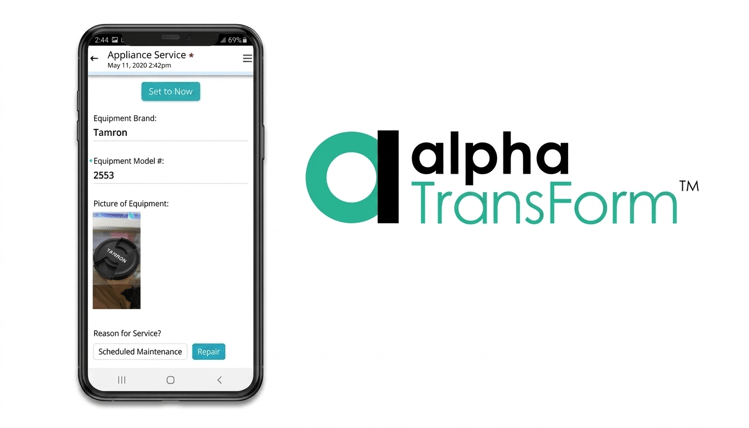
Alpha TransForm's Field Service app logs equipment details, captures photos, and records service reasons on mobile, giving field teams a faster, paperless alternative to manual maintenance forms.
Alpha TransForm is a no-code mobile app builder built specifically for operations and field teams. Business users can convert paper forms into mobile apps in days, without writing code or routing requests through IT. It is designed for teams that need to digitize high-friction, paper-heavy workflows quickly and iterate without technical dependencies.
Apps built with Alpha TransForm work offline first, capturing data through barcode scanning, photo and signature capture, GPS timestamps, and conditional logic, then syncing automatically to dashboards and integrated business systems when connectivity returns. This is a critical advantage in environments like manufacturing floors, remote oil fields, and warehouses, where network coverage is unreliable.
Alpha TransForm provides pre-built templates for common supply chain workflows, including the Gemba Walk Template, Non-Conformance Report Template, Equipment Inspection Checklist, and Field Service Dispatch App, all customizable without IT involvement and deployable to mobile devices within days.
2. GoCanvas
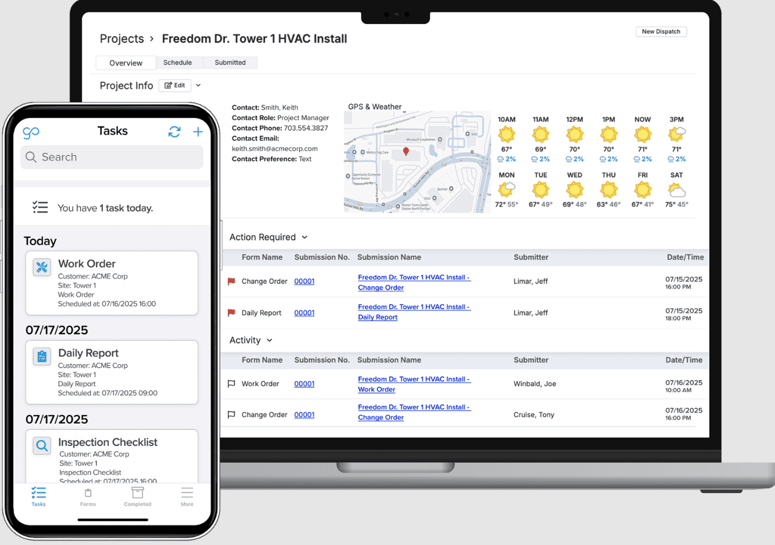
GoCanvas organizes work orders, daily reports, and inspection checklists across projects, giving field teams a structured view of tasks and submissions on both mobile and desktop. (Image source: GoCanvas)
GoCanvas is a mobile forms platform designed for field service, construction, and light industrial teams. It provides a broad library of pre-built form templates that users can customize with photos, signatures, and barcode scanning. Its straightforward interface means business users can get simple, standalone forms up and running without technical support.
GoCanvas works best for teams digitizing relatively uniform, single-step workflows across consistent environments. For organizations whose primary need is replacing basic paper forms with digital equivalents, it delivers a clean and accessible experience with a manageable learning curve.
3. Oracle Warehouse Management (Oracle WMS)
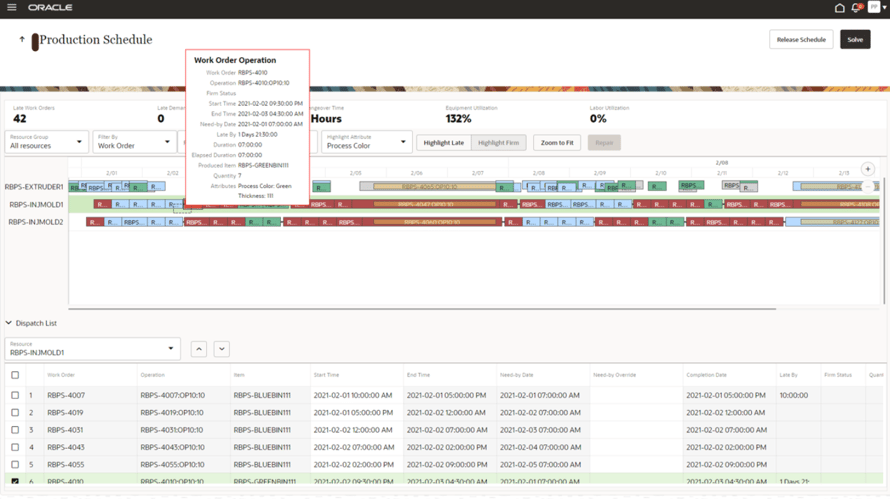
Oracle's production scheduling dashboard gives warehouse and operations managers a real-time view of work orders, equipment utilization, and dispatch timelines, all in one centralized interface. (Image source: Oracle)
Oracle WMS is an enterprise-grade system designed to manage inventory movement at scale within a facility, covering receiving, putaway, picking, packing, and shipping. It provides structured, system-driven inventory control with real-time visibility across warehouse operations and supports scan-based mobile workflows directly on the floor.
Oracle WMS is a strong fit for large distribution operations that need a purpose-built platform for high-volume inventory management. Organizations already invested in the Oracle ecosystem benefit from deep native integration across their enterprise systems, making it a reliable backbone for warehouse operations that demand precision, traceability, and scale.
Tools for Supply Chain Digitization: At-a-Glance Summary
|
Tool |
Alpha TransForm |
GoCanvas |
Oracle WMS |
|
Best For |
Inspections, audits, field ops & manufacturing workflows |
Simple standalone field forms |
Structured warehouse inventory control at scale |
|
Offline Capability |
Full offline-first capability; captures all data types: barcode, photo, GPS, signatures, without connectivity; syncs automatically on reconnect |
Offline capability; forms completed without signal and synced automatically on reconnect |
Minimal |
|
No-Code / Business User |
Business users build & deploy apps independently |
Business users build basic forms independently |
Requires dedicated IT and Oracle-certified implementation teams |
|
Pre-Built Supply Chain Templates |
Gemba walks, 5S audits, NCR, equipment inspections, field dispatch |
General field service and inspection form library |
No pre-built templates; configured per implementation |
|
Barcode Scanning |
On-device and remote look-ups |
Supported |
Supported; core to warehouse picking and receiving workflows |
|
Deployment Speed |
Days, from paper form to live mobile app |
Days for simple forms |
Months; full implementation project required |
|
IT Required |
No, operations teams deploy and modify independently |
No, for basic use; IT is needed for integrations |
Yes, extensive IT resources are required throughout |
Why Alpha TransForm Works Best for Supply Chain Digitization

Alpha TransForm helps manufacturing and field operations teams replace paper workflows with mobile-first apps.
Teams that switch from paper to Alpha TransForm don't wait months for impact. Within days of deployment, operations leaders gain real-time visibility into inspections, audits, and field workflows, eliminating data gaps and providing accurate, actionable information that flows directly into the systems already running the business.
The result is fewer missed flags, faster response times, and a clear audit trail that holds up under scrutiny. And because business users own the process from build to deployment, digitization scales at the pace of the operation, not the pace of IT backlogs.
FAQs
What does it mean to digitize a supply chain process?
Which supply chain processes are easiest to digitize first?
Can supply chain apps work in areas without internet connectivity?
Do supply chain digitization tools require IT support to set up?
*Note: Alpha TransForm is a no-code app builder developed by Alpha Software. Product features, availability, pricing, and results referenced are for informational purposes only and subject to change; actual capabilities and outcomes may vary based on configuration and use case. To confirm current offerings and pricing, talk to a Solutions Consultant.





Comment