

Explore IoT data collection architecture with real-world examples. Learn how Alpha Software transforms deployments with scalable solutions.
Key Takeaways
- Internet of Things (IoT) data collection architectures consist of 4–6 essential layers, ranging from perception and connectivity to edge computing and cloud analytics.
- Real-world implementations vary by use case; cloud-centric designs suit high-volume analytics, edge-focused models excel in manufacturing, while hybrid approaches balance both for healthcare wearables.
- Leading platforms, including AWS IoT Core, Azure IoT Hub, and Alpha Transform, offer distinct advantages in scalability, data processing, and customization.
- Alpha TransForm empowers organizations to build customized IoT data collection applications in hours, and gives you complete control over your data collection workflows without vendor lock-in
Why IoT Data Collection Architecture Matters
Billions of connected devices generate massive data streams every second. Manufacturing floors monitor equipment vibrations to predict failures, healthcare wearables track patient vitals in real time, and smart city sensors analyze traffic patterns to optimize flow. Each scenario demands a robust architecture that captures, transmits, processes, and analyzes data without breaking down under pressure.
In 2025, IoT devices will collect approximately 79 zettabytes of data, a volume that will require purpose-built architectures. Organizations that master these architectures gain competitive advantages through faster insights, reduced operational costs, and improved decision-making capabilities.
|
Alpha TransForm: Digital Solutions to Collect, Analyze, and Act on Data Turn Paper Forms Into Mobile Apps in Minutes | No IT Team Required | Works Offline | Trusted by Manufacturing & Field Teams  Why Business Leaders Choose Alpha TransForm: ✓ Built-in custom dashboards and workflows to trigger business activity✓ Seamless integration with existing business systems ✓ Replace Excel with digital data collection and analysis ✓ Rapid digitization—build apps in days without IT bottlenecks ✓ Proven ROI with scalable start-small approach ✓ Trusted by manufacturing, construction, and healthcare leaders From Paper to Digital in 3 Steps 1. Upload your paper form or start from scratch2. Customize fields and logic as needed 3. Deploy to mobile devices and start collecting data instantly Stop losing time with paper processes. Start delivering business value today.
|
Core Layers of IoT Data Collection Architecture
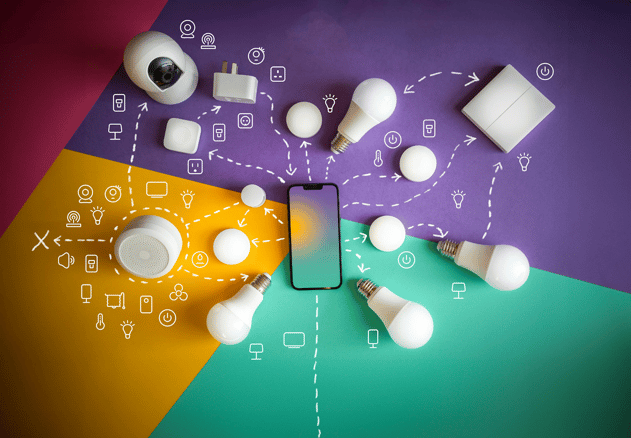
Modern IoT architectures typically span four to six interconnected layers, each serving distinct functions in the data pipeline. Understanding the functions of these layers helps organizations design systems that efficiently capture, process, and analyze data from connected devices.
- Perception Layer: Sensors and actuators capture raw environmental data, temperature sensors in warehouses, motion detectors in security systems, or pressure monitors in industrial equipment convert physical phenomena into digital signals.
- Connectivity Layer: Handles data transmission using protocols optimized for IoT constraints. Data transmits reliably across various network types, even in challenging connectivity environments.
- Edge Computing Layer: Processes data locally to reduce latency and enable real-time decisions. Factory machines can detect abnormal vibrations and trigger immediate shutdowns without waiting for cloud processing—critical when milliseconds matter.
IoT architectures operate across multiple interconnected layers, from sensors capturing
raw data to cloud platforms delivering actionable insights through user applications.
- Data Processing Layer: Cloud platforms provide storage and advanced analytics capabilities. Massive datasets undergo transformation, aggregation, and machine learning analysis that edge devices can't handle on their own.
- Application Layer: Delivers insights through dashboards, alerts, and automated actions. Users interact with processed data through mobile apps, web interfaces, or automated systems that trigger business processes.
Real-World Architecture Examples Across Industries

Different industries deploy IoT architectures tailored to their specific operational needs.
Cloud-Centric Architectures
These work well for high-volume data analysis. Smart cities stream traffic data to AWS for centralized analytics, processing millions of data points to optimize traffic lights and emergency response routes. The cloud's unlimited computational resources enable complex pattern recognition across city-wide networks.
Edge-Focused Designs
Practiced widely in manufacturing environments, factory machines preprocess on-site vibration and temperature data, enabling immediate failure prediction without cloud dependency. This approach cuts response times from minutes to milliseconds while reducing bandwidth costs.
IoT architectures vary by industry need—cloud-centric for data analysis, edge-focused for
real-time response, or hybrid models combining both approaches.
Hybrid Models
This combines cloud-centric and edge-focused designs. Healthcare wearables edge-filter heart rates before sending them to the cloud for doctor review, balancing real-time alerts with comprehensive historical analysis. Edge processing handles immediate anomaly detection while cloud systems provide long-term trend analysis.
Leading IoT Platforms Comparison
Enterprise Cloud Platforms
AWS IoT Core leads in service breadth and ecosystem maturity, supporting multiple protocols with a guaranteed 99.9% connectivity SLA. Its integration with Lambda, Kinesis, and SageMaker supports complex enterprise deployments that require extensive cloud services.
Azure IoT Hub excels in enterprise integration, particularly for Microsoft ecosystems. Bidirectional device communication and device twin technology simplify implementation, while Azure IoT Edge seamlessly extends cloud intelligence to edge devices.
Alpha TransForm: Build Your Custom IoT Data Collection App
While enterprise platforms provide infrastructure, Alpha TransForm empowers organizations to build customized IoT data collection applications in hours, not months. Unlike platform-dependent solutions, Alpha TransForm gives you complete control over your data collection workflows without vendor lock-in.
Alpha TransForm enables you to design mobile forms that collect sensor data, equipment readings, or field observations, and then build custom dashboards that visualize real-time IoT data streams. You can configure automated workflows triggering actions based on data thresholds and deploy offline-capable apps that sync when connectivity returns. Our platform requires no coding; business users build apps without IT dependencies and deploy in hours rather than months.
Challenges & Best Practices
- Data Volume Strains Bandwidth: Massive sensor networks generate overwhelming data streams. Use compression algorithms, intelligent sampling, and edge preprocessing to reduce the amount of data transmitted.
- Security Risks Multiply: Each connected device represents a potential entry point for an attack. Implement device authentication, encrypted communications, network segmentation, and regular security audits.
- Latency Requirements: Real-time applications can't tolerate cloud round-trip delays. Deploy edge computing for time-critical decisions.
- Cost Management: Cloud transfer and storage costs accumulate quickly. Implement data lifecycle policies and use edge processing to reduce cloud dependency.
Alpha TransForm: Rapid IoT Data Collection Without Development Bottlenecks
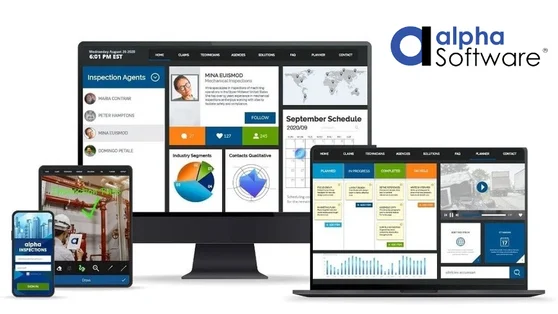
Alpha TransForm transforms complex IoT deployments into manageable, scalable solutions that deliver business value quickly. Organizations across manufacturing, healthcare, logistics, and smart infrastructure leverage Alpha's no-code platform to build custom IoT data collection applications that collect sensor data, equipment readings, or field observations—complete with photo capture, barcode scanning, GPS location stamps, timestamps, and e-signatures without extensive development resources.
Accelerated Development Cycles
Our platform's no-code environment dramatically accelerates development. Teams create custom IoT applications, dashboards, and data workflows in hours rather than months. Business analysts and domain experts build solutions directly without waiting for IT resources.
Alpha TransForm's no-code platform enables organizations to rapidly deploy custom IoT
data-collection applications with an offline-first architecture and enterprise-grade security.
Offline-First Architecture
Offline-first architecture ensures reliability even with intermittent connectivity. Edge devices continue to collect and process data during network disruptions and automatically synchronize when connections are restored. Critical for field operations, manufacturing floors, and remote monitoring scenarios.
Enterprise-Grade Security
Security features protect sensitive IoT data throughout its lifecycle. Role-based access controls, data encryption, and audit logging meet compliance requirements across industries. Your data collection applications meet security standards without custom security development.
Our platform scales from pilot projects to enterprise-wide deployments without architectural changes. Alpha TransForm enables rapid mobile form deployment for IoT data collection scenarios.
Frequently Asked Questions (FAQs)
What's the difference between building IoT apps on enterprise platforms vs. using Alpha TransForm?
Enterprise platforms like AWS IoT and Azure IoT Hub provide cloud infrastructure for device connectivity and data storage, but they require significant development resources to build custom data collection applications.
Alpha TransForm complements these platforms by providing no-code tools that enable business teams to create custom IoT data-collection apps in hours. You get the infrastructure benefits of enterprise platforms with the speed and flexibility of no-code development.
How do I choose between edge processing and cloud processing for my IoT data?
The decision depends on your latency requirements, bandwidth constraints, and the complexity of your analytics. Use edge processing when decisions must happen in milliseconds (manufacturing safety, autonomous systems), when bandwidth is limited or expensive, or when connectivity is unreliable.
Use cloud processing for complex analytics requiring machine learning, when you need unlimited computational resources, or for long-term data storage and trend analysis.
What are common mistakes when designing IoT data collection architectures?
Organizations often underestimate data volume early, leading to overruns in bandwidth and storage costs. Treating security as an afterthought rather than building it into the architecture from day one creates vulnerabilities. Failing to plan for device provisioning at scale causes operational bottlenecks.
Choosing protocols without considering power consumption can impact the longevity of battery-powered sensors. Not implementing edge preprocessing results in unnecessary cloud costs. The most successful deployments start with clear business objectives and work backward to technology choices.
Can IoT architectures handle legacy equipment and modern sensors simultaneously?
Yes, well-designed architectures accommodate heterogeneous environments through protocol gateways and adapters. Legacy equipment often uses industrial protocols like Modbus or PROFIBUS, while modern sensors communicate via MQTT or HTTP. Edge gateways translate between protocols, normalizing data before transmission to cloud systems.
This approach protects existing infrastructure investments while enabling gradual modernization. Alpha TransForm's flexible data collection capabilities work with both legacy systems through custom integrations and modern IoT devices through standard protocols.
How quickly can I deploy an IoT data collection solution using Alpha TransForm?
Alpha TransForm enables deployment timelines measured in hours or days rather than months. Simple data collection forms can be built and deployed in under an hour. More complex applications with custom logic, dashboards, and integrations typically deploy within days.
Our no-code platform eliminates development bottlenecks, and business users who understand data collection requirements can build applications directly.






Comment