
Learn about the top manufacturing scheduling software for small businesses, including pricing, key benefits, and platform comparisons to streamline production.
Key Takeaways
- Software centralizes production and inventory management to eliminate bottlenecks and improve resource allocation for small manufacturing businesses.
- Real-time visibility into shop floor operations helps managers identify delays early and make data-driven decisions to protect profit margins.
- Integrating scheduling tools with accounting and e-commerce platforms reduces manual data entry errors and streamlines entire production workflows.
- Offline functionality and mobile access are core features for maintaining productivity in warehouse environments with unreliable internet connectivity.
- Alpha TransForm allows manufacturers to rapidly digitize paper-based scheduling and quality workflows using no-code mobile apps that work entirely offline.
Why Small Manufacturers Need Scheduling Software
Manufacturing scheduling software eliminates growth-limiting bottlenecks by centralizing production planning, inventory management, and resource allocation into a single digital system. By replacing manual spreadsheets with real-time tracking, small manufacturers can prevent missed deadlines and inaccurate inventory counts that erode profit margins. These platforms enable leaner operations to compete with larger competitors through automated routine tasks and improved data accuracy across the shop floor.
The right scheduling solution provides clear visibility into production workflows, helping managers identify delays before they impact customer satisfaction. This guide evaluates leading platforms for small businesses, including Alpha TransForm, MRPeasy, and Fishbowl, with a focus on costs, offline capabilities, and integration features. Pricing for these platforms typically ranges from $30 per user per month to $229 for entry-level subscription tiers, depending on the complexity of the manufacturing requirements.
|
Alpha TransForm: Digital Solutions to Collect, Analyze, and Act on Data Turn Paper Forms Into Mobile Apps in Minutes | No IT Team Required | Works Offline | Trusted by Manufacturing & Field Teams  Why Business Leaders Choose Alpha TransForm: ✓ Built-in custom dashboards and workflows to trigger business activity✓ Seamless integration with existing business systems ✓ Replace Excel with digital data collection and analysis ✓ Rapid digitization—build apps in days without IT bottlenecks ✓ Proven ROI with scalable start-small approach ✓ Trusted by manufacturing, construction, and healthcare leaders From Paper to Digital in 3 Steps 1. Upload your paper form or start from scratch2. Customize fields and logic as needed 3. Deploy to mobile devices and start collecting data instantly Stop losing time with paper processes. Start delivering business value today.
|
Top Manufacturing Scheduling Platforms for Small Businesses
1. Alpha TransForm

Alpha TransForm helps manufacturers digitize paper-based processes with no-code mobile apps.
Alpha TransForm takes a different approach to manufacturing scheduling by focusing on rapidly digitizing paper-based processes. Rather than replacing existing systems entirely, our platform allows manufacturers to build custom mobile apps for scheduling, inspections, Gemba walks, 5S audits, and quality control without coding or IT support.
The platform excels in environments where offline functionality is necessary. Warehouse floors, production lines, and field locations often have spotty connectivity, but apps built with Alpha TransForm continue to work without interruption and data syncs automatically when connectivity returns. Features include photo capture, barcode scanning, GPS tracking, timestamps, digital signatures, and conditional logic that adapts forms based on user input. Built-in dashboards and alerts help managers spot issues before they become costly problems.
Pricing starts with a free tier that includes access to pre-built manufacturing templates. Paid plans begin at $30 per user per month (billed annually), making it accessible for small teams looking to digitize scheduling and quality processes incrementally.
2. MRPeasy
MRPeasy provides cloud-based production planning and inventory management for small manufacturers.
MRPeasy is a cloud-based material requirements planning system built specifically for small manufacturers. The platform combines production scheduling with inventory management, procurement, and basic accounting functions in a single interface.
The production planning module includes a master schedule, Gantt charts with rescheduling capabilities, and per-worker production plans. MRPeasy also handles bill of materials management, serial and lot tracking, and integrations with QuickBooks, Xero, and e-commerce platforms like Shopify and WooCommerce.
Pricing ranges from $49–$149 per user per month, depending on the tier. The Starter edition covers basic functionality, while Professional and Enterprise tiers add advanced forecasting, traceability, and reporting features. A free trial is available.
3. Fishbowl Manufacturing

Fishbowl Manufacturing provides inventory and production management with deep QuickBooks integration.
Fishbowl Manufacturing targets small to midsize businesses that need manufacturing resource planning capabilities without abandoning QuickBooks. The platform combines work order management, bill-of-materials tracking, and inventory control with tight QuickBooks integration.
Key features include barcode scanning, multi-location inventory tracking, production capacity planning, and automated work order generation. Fishbowl also supports manufacturing costing methods to help businesses price products accurately and track expenses.
Fishbowl provides tiered monthly pricing based on user count. The Essentials plan starts at $229 per month (billed annually) for 2 users, while the Growth plan costs $429 per month for 5 users. For larger teams, the Scale plan provides access for 10 users at $729 per month. Businesses with more extensive needs can request custom pricing through the Advanced tier. This subscription model makes Fishbowl accessible for small manufacturers who prefer predictable monthly costs over large upfront license fees.
Key Benefits of Manufacturing Scheduling Software
Effective scheduling software delivers measurable improvements across several areas of manufacturing operations. For small businesses operating with limited resources, these benefits compound quickly and can mean the difference between struggling to keep up and scaling confidently.
1. Real-time visibility into production status eliminates guesswork and enables faster decision-making when priorities shift or problems arise. Managers can see exactly where each job stands, which machines are running, and which orders are at risk of missing deadlines. This transparency allows teams to address bottlenecks before they cascade into costly delays or missed shipments.
2. Automated inventory tracking prevents stockouts that halt production lines and reduces excess inventory that ties up working capital. The software monitors raw materials, work-in-progress items, and finished goods simultaneously, alerting teams when reorder points are reached. This level of control helps small manufacturers avoid the twin problems of running out of critical components and overordering materials that sit idle on shelves.
3. Resource allocation improves when scheduling decisions rely on accurate, current data rather than estimates or outdated spreadsheets. The software helps balance workloads across machines and workers, reducing overtime costs while maximizing throughput. Production capacity is easier to forecast, improving quoting accuracy and customer communication.
4. Integration with accounting and e-commerce platforms reduces manual data entry and the errors that come with it. Orders flow automatically into production schedules, and completed work updates financial records without duplicate entry. For small teams wearing multiple hats, this time savings translates directly into capacity for higher-value work, such as process improvement and customer relationships.
5. Quality and compliance tracking become more consistent when built into daily workflows. Digital records create audit trails that support ISO certification, customer audits, and internal continuous improvement initiatives. Historical data enables root cause analysis when defects occur, turning problems into opportunities for lasting process improvements.
6. Mobile access and offline capabilities keep workers productive in challenging environments where desktop systems fall short. Production data can be captured at the point of work rather than transcribed later from paper notes, improving accuracy and eliminating lag time between activities and reporting.

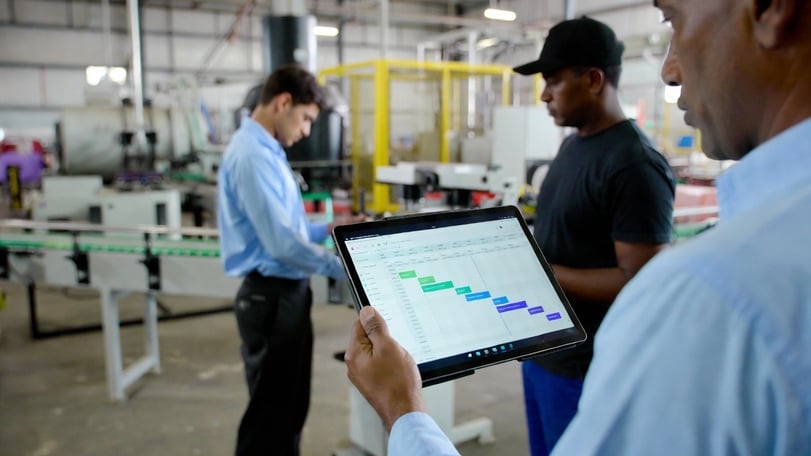
Manufacturing scheduling software gives small businesses real-time visibility into production, inventory, and resource allocation.
Manufacturing Scheduling Software: At-a-Glance Summary Table
|
Platform |
Best For |
Pricing |
Offline Capability |
Key Strength |
|
Alpha TransForm |
Digitizing paper processes, quality workflows |
From $30/user/month |
Yes |
No-code apps, works offline, and has fast deployment |
|
MRPeasy |
Small manufacturers (10–200 employees) |
$49–$149/user/month |
Limited |
Affordable MRP with accounting integrations |
|
Fishbowl |
QuickBooks users |
Starts at $229/month |
Limited |
Deep QuickBooks integration, barcode scanning |
Why Alpha TransForm Leads for Manufacturing Scheduling
Alpha Software delivers digital solutions that help manufacturers collect, analyze, and act on production data.
Small manufacturers need reliable tools that function in demanding environments without requiring direct IT involvement. Alpha TransForm addresses these needs by allowing teams to build custom mobile applications that function perfectly even without an active internet connection. This approach keeps production data accurate and accessible regardless of shop floor connectivity issues.
The transition from manual paper forms to digital workflows happens quickly through a simple three-step process. Operations teams can utilize pre-built templates for inspections and audits to see immediate improvements in resource management. Contact a solutions consultant today to see how Alpha TransForm can modernize your manufacturing scheduling and quality control.
FAQs
What is manufacturing scheduling software?
How long does it take to implement manufacturing scheduling software?
Can manufacturing scheduling software work without internet connectivity?
What features should small manufacturers look for in scheduling software?
What makes Alpha TransForm different from traditional manufacturing software?
*Note: Alpha TransForm is a no-code app builder developed by Alpha Software. Product features, availability, pricing, and results referenced are for informational purposes only and subject to change; actual capabilities and outcomes may vary based on configuration and use case. To confirm current offerings and pricing, talk to a Solutions Consultant.






Comment