

Streamline mixed-use development data collection with offline-capable mobile apps. Learn about digital tools for construction tracking and compliance.
Key Takeaways
- Mixed-use developments require coordinated data collection from site surveys to post-construction performance tracking, making mobile apps essential for managing complexity.
- Offline-first mobile tools eliminate connectivity barriers, ensuring field teams capture inspection data, progress photos, and compliance records without interruption.
- Digital checklists with GPS tagging, photo markup, and automatic timestamps replace error-prone paper processes, delivering instant audit trails and faster decision-making for developers and contractors.
- Alpha TransForm empowers development teams to build custom data collection apps in hours without IT support, integrating field data directly with project management and ERP systems.
What Is Mixed-Use Building Data Collection?
Mixed-use building data collection is the systematic capture and analysis of information throughout a development's lifecycle, from initial feasibility studies through construction and ongoing operations. These projects combine residential units, retail spaces, offices, and sometimes hotels into single structures, creating complex data requirements across multiple stakeholder groups.
Developers must track zoning compliance, structural engineering specifications, construction progress, tenant metrics, energy performance, and occupancy rates. Each phase generates distinct data needs: site acquisition requires topographic surveys and soil testing; design demands seismic and hydrological analysis; construction tracks material quantities and labor hours; and operations monitor HVAC efficiency and foot traffic patterns.
Traditional paper-based processes create bottlenecks when coordinating between architects, contractors, property managers, and regulatory agencies. Mobile data collection apps allow teams to capture information directly on-site, with validation rules that prevent incomplete entries and automatic syncing that ensures everyone works from current data.
|
Alpha TransForm: Digital Solutions to Collect, Analyze, and Act on Data Turn Paper Forms Into Mobile Apps in Minutes | No IT Team Required | Works Offline | Trusted by Manufacturing & Field Teams  Why Business Leaders Choose Alpha TransForm: ✓ Built-in custom dashboards and workflows to trigger business activity✓ Seamless integration with existing business systems ✓ Replace Excel with digital data collection and analysis ✓ Rapid digitization—build apps in days without IT bottlenecks ✓ Proven ROI with scalable start-small approach ✓ Trusted by manufacturing, construction, and healthcare leaders From Paper to Digital in 3 Steps 1. Upload your paper form or start from scratch2. Customize fields and logic as needed 3. Deploy to mobile devices and start collecting data instantly Stop losing time with paper processes. Start delivering business value today.
|
Development Phases & Data Requirements

Pre-Development & Feasibility
Early-stage data collection assesses whether a mixed-use project is financially and technically viable. Developers conduct market feasibility studies to gauge demand for housing, retail, and office space in the target area. Site reconnaissance surveys document existing conditions, including topography, soil composition, and proximity to utilities.
Geotechnical investigations determine foundation requirements, especially critical for high-rise structures in seismic zones. Mobile apps with GPS tagging help survey crews log the exact locations of soil samples and rock formations, creating digital maps that engineers reference throughout the design process.
Construction projects generate large data sets and require active construction
quality control, necessitating offline-capable mobile data collection tools.
Design & Engineering
Design teams generate massive data sets covering structural specifications, MEP (mechanical, electrical, plumbing) systems, and architectural details. Building Information Modeling (BIM) coordinates three-dimensional designs across disciplines, identifying potential conflicts before construction begins.
Data collection during this phase includes load calculations, material specifications, and code compliance verification.
Construction & Quality Control
Active construction generates the highest volume of field data. Daily reports track labor hours, material deliveries, equipment usage, and safety incidents. Quality control inspections verify that concrete pours, steel connections, and MEP installations meet specifications. Quantity surveying measures completed work for progress billing.
Construction sites often lack reliable connectivity in elevator shafts, underground parking, or areas with heavy steel framing. Offline-first mobile apps store inspection data securely on devices and sync automatically when crews return to areas with signal.
Essential Mixed-Use Building Data Collection Methods

Field surveys remain foundational for mixed-use developments. Survey crews use GPS-enabled devices to establish property boundaries, record elevations, and map utility locations. Drone-based remote sensing captures aerial site plans and progress photos, particularly useful for tracking large-footprint projects.
IoT sensor networks provide continuous data streams on building occupancy. Smart meters track energy consumption across residential and commercial zones, identifying inefficiencies. Occupancy sensors optimize HVAC scheduling based on actual usage patterns. Environmental monitors measure air quality and humidity, ensuring tenant comfort while controlling operating costs.
Mixed-mode approaches combine quantitative metrics with qualitative inputs. Developers conduct stakeholder interviews with potential tenants to gather preferences that inform unit layouts and amenity packages. Post-occupancy surveys capture resident satisfaction data, guiding future projects.
RFID tags on construction materials streamline inventory management, reducing delays from missing components. Equipment checks verify that fire suppression systems, elevators, and emergency generators function correctly before occupancy permits are issued.
Modern developments integrate field surveys, IoT sensors, and stakeholder feedback to optimize building
performance and tenant satisfaction.
Tools for Mixed-Use Building Data Collection
Selecting the right data collection platform can make the difference between seamless coordination and costly delays. Here are three proven solutions development teams rely on:
1. Procore
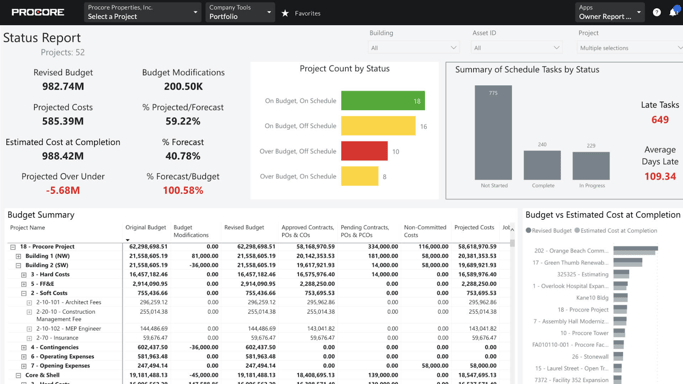
Procore offers a comprehensive construction management platform with built-in data collection features for large-scale developments. The software provides document management, RFI tracking, and inspection modules designed for enterprise construction firms managing multiple mixed-use projects simultaneously.
Teams benefit from centralized data storage and collaboration tools, though the platform requires significant setup time and IT involvement for customization.
Procore provides enterprise construction management and inspection tools designed for large developers
managing multiple mixed-use projects. (Image source: Procore Technologies Inc.)
2. PlanGrid (Autodesk Construction Cloud)
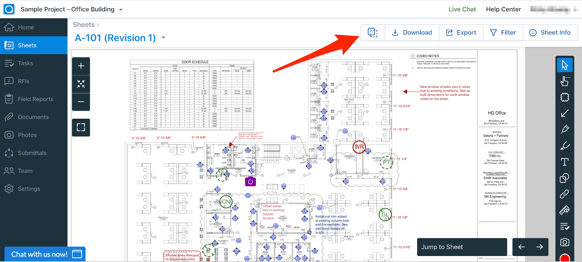
PlanGrid specializes in blueprint management and field coordination, enabling crews to mark up digital plans directly from the job site. The platform excels at version control for construction drawings and provides basic inspection capabilities. Field teams can access current plans offline and sync changes when connectivity returns.
While strong for plan management, PlanGrid's inspection and custom form capabilities are more limited than those of purpose-built data collection platforms. Ideal for projects where drawing coordination is the primary concern.
PlanGrid excels at blueprint management and field coordination with offline plan access, though
its custom inspection and form capabilities are more limited than dedicated data collection platforms. (Image source: PlanGrid)
3. Alpha TransForm
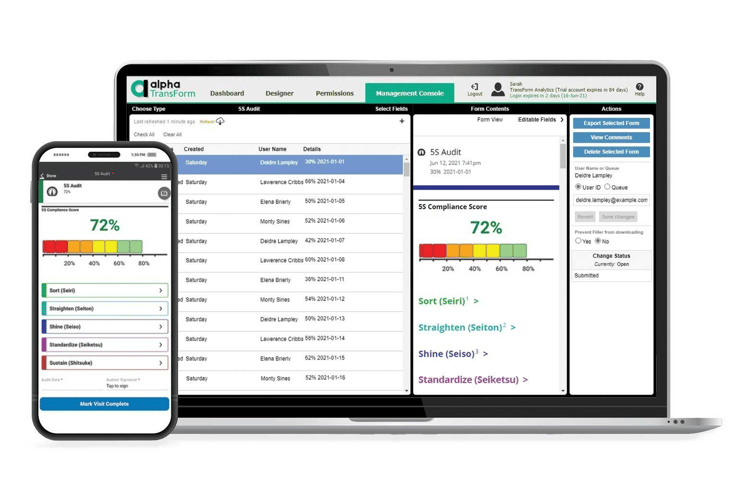
Alpha TransForm stands apart as a no-code platform that development teams customize without IT bottlenecks. Unlike rigid enterprise software, Alpha TransForm lets project managers and quality coordinators build exactly the data-collection apps they need in under 30 minutes, with no developers required.
Alpha TransForm's offline-first architecture ensures reliable data capture throughout construction sites where connectivity is intermittent or nonexistent. Our Field Service Dispatch App Template demonstrates Alpha TransForm's flexibility for construction environments. Its noteworthy features include:
- SMS alerts to notify inspectors of schedule changes and urgent site issues.
- Geolocation with timestamps that create audit trails showing exactly when and where inspections occurred.
- Offline schedule storage keeps the day's inspection agenda and site data accessible on devices without network coverage.
No-code platforms enable teams to build custom data collection apps in under 30 minutes without requiring IT
support or developers.
- Offline image capture with annotation allows crews to photograph deficiencies and mark them up immediately, even in basement levels or steel-framed areas with no signal.
- Ample media storage enables devices to carry repair manuals, specification sheets, and reference documents for offline access.
- Digital signature capture documents contractor sign-offs and regulatory approvals with legally valid records.
Why Alpha TransForm Works for Mixed-Use Development

Alpha TransForm is designed for teams that need to digitize field data collection without the complexity or delays associated with IT. Development coordinators, project managers, and quality supervisors can create custom mobile apps in hours, just as manufacturing operations digitize equipment inspections and 5S audits without developer involvement.
Our offline-first technology ensures reliable data capture in construction environments where connectivity is intermittent or absent. All data is stored securely on the device and syncs automatically when the connection returns, eliminating data loss and workflow interruptions.
Alpha TransForm enables construction teams to digitize field data collection with offline-first mobile
apps that require no coding, while syncing automatically when connectivity returns.
Field teams use smartphones or tablets to capture rich documentation that paper never could. Photo capture with markup highlights deficiencies during punch-list walks. GPS tagging records the exact locations of structural observations. Barcode scanning verifies material deliveries against specifications. Timestamps and digital signatures create audit trails for regulatory compliance and contractor disputes.
Alpha TransForm integrates directly with systems that development teams already use, including project management platforms, Enterprise Resource Planning (ERP) systems, and reporting tools. Field data is seamlessly integrated into central systems, eliminating double-entry and ensuring real-time visibility for stakeholders. Conditional logic can be used to adapt forms based on different scenarios.
A project supervisor can build and deploy a custom app in under a few hours. Every-day use cases include site safety inspections, concrete pour documentation, and equipment inspections. As project requirements evolve, you update forms yourself without submitting IT tickets or waiting for developers.
Frequently Asked Questions (FAQs)
What types of data are most critical during mixed-use construction?
Critical construction data includes daily progress reports, quality control inspections, material delivery tracking, safety incident logs, and subcontractor completion milestones. Structural verification data directly impacts building integrity.
Progress photos with GPS tagging create visual records for dispute resolution and progress billing. Environmental monitoring data ensures compliance with noise ordinances and dust control requirements during construction in urban areas.
How do mobile apps handle multiple building zones with different requirements?
Mobile data collection apps use conditional logic to adapt forms based on building zones. When an inspector selects "residential tower" rather than "retail podium," the app automatically displays relevant checklists—residential inspections might include unit finishes and plumbing fixtures.
In contrast, retail checklists focus on storefront systems and fire separations. This ensures teams capture zone-specific data without carrying multiple paper forms or manually skipping irrelevant sections.
What happens when crews lose connectivity on construction sites?
Offline-first mobile apps eliminate connectivity as a barrier to data collection. All inspection data, photos, and form entries are securely stored on mobile devices, even in areas with no network coverage. Once devices reconnect, data automatically syncs with central systems.
Can field data integrate with existing project management software?
Modern mobile platforms integrate with project management systems, ERP platforms, and BIM software commonly used in construction. Alpha TransForm supports integration with ERP systems, eliminating manual data transfer, reducing errors, and providing real-time visibility for project managers and owners tracking multiple sites.
*Note: Pricing and/or product availability mentioned in this post are subject to change. Please check the retailer's website for current pricing and stock information before making a purchase.






Comment