
Understand how food & beverage manufacturers are digitizing inspections, traceability, and quality processes, with real-world examples and key industry trends.
Key Takeaways
- Food and beverage manufacturers still relying on paper-based processes face growing compliance risks, slower output, and limited visibility into operations.
- Key processes being digitized include quality inspections, inventory traceability, Gemba walks, and regulatory compliance documentation across plant floors.
- Companies like Lavazza and Döhler have gained measurable operational advantages by replacing manual workflows with connected digital tools.
- Trends like AI-driven analytics, offline-first mobile apps, and real-time dashboards are accelerating how quickly manufacturers can act on plant-floor data.
- Alpha TransForm helps food and beverage teams digitize paper forms into mobile apps in minutes, with offline reliability and no reliance on IT.
The Cost of Staying Analog in Food & Beverage
Paper-based processes may seem manageable, but in the food and beverage industry, their hidden costs compound quickly. Handwritten inspection logs get lost or arrive late. Compliance records sit in filing cabinets instead of feeding dashboards. And when a food safety issue arises, tracing the problem through paper trails can take days rather than minutes. The result is not just slower operations; it is greater exposure to regulatory penalties and reputational damage.
Digital processes solve these challenges by replacing manual workflows with connected tools that capture, centralize, and surface data in real time. Instead of chasing down paper records, teams can access inspection results, compliance documentation, and traceability data from a single platform. Problems that once went unnoticed for days become visible immediately, giving operations leaders the speed and confidence to act before small issues become costly ones.
The shift is already underway across the industry. This article breaks down the specific processes being digitized in food and beverage manufacturing, highlights real companies seeing results, and covers the trends shaping the next wave of change. The focus is practical: what matters most to operations leaders looking to move from manual to digital without disrupting production.
|
Alpha TransForm: Digital Solutions to Collect, Analyze, and Act on Data Turn Paper Forms Into Mobile Apps in Minutes | No IT Team Required | Works Offline | Trusted by Manufacturing & Field Teams  Why Business Leaders Choose Alpha TransForm: ✓ Built-in custom dashboards and workflows to trigger business activity✓ Seamless integration with existing business systems ✓ Replace Excel with digital data collection and analysis ✓ Rapid digitization—build apps in days without IT bottlenecks ✓ Proven ROI with scalable start-small approach ✓ Trusted by manufacturing, construction, and healthcare leaders From Paper to Digital in 3 Steps 1. Upload your paper form or start from scratch2. Customize fields and logic as needed 3. Deploy to mobile devices and start collecting data instantly Stop losing time with paper processes. Start delivering business value today.
|
Main Processes Being Digitized in the Food & Beverage Industry
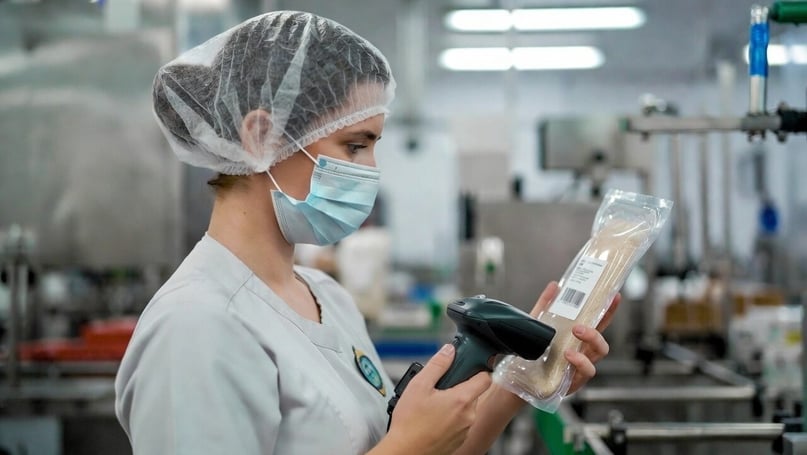
Mobile apps with barcode scanning and real-time data capture are replacing paper-based quality checks and inventory tracking on the plant floor.
Quality Inspections & Compliance Documentation
Every food and beverage facility conducts routine quality checks, including temperature logs, sanitation verifications, equipment condition reports, and allergen controls. When these inspections live on paper, they are difficult to standardize, impossible to analyze in real time, and slow to retrieve during audits.
Digital inspection forms with built-in photo capture, timestamps, GPS tagging, and conditional logic ensure that data is accurate the moment it is collected. Alerts can be triggered automatically when a reading falls outside acceptable limits, so problems get addressed before they escalate.
Inventory Tracking & Traceability
Traceability is not optional in food and beverage; it is a regulatory requirement under frameworks like FSMA 204. Manufacturers need to document the sources of ingredients, how ingredients move through production, and where finished goods are shipped.
Mobile apps with barcode scanning and real-time data syncing replace manual lot tracking with a digital chain of custody that can be searched instantly during a recall or audit.
Gemba Walks & Continuous Improvement
Gemba walks, in which managers observe operations firsthand on the production floor, are central to lean manufacturing in the food and beverage industry. Paper-based Gemba records, however, often sit unreviewed for weeks.
Digital Gemba walk apps let supervisors capture observations with photos, voice notes, and structured scoring, then sync findings to a central dashboard where trends become visible and corrective actions can be assigned and tracked.
Examples: Digital Transformation in Action
Lavazza: Scaling Production Through Connected Operations
Lavazza, the Italian coffee manufacturer, saw a surge in global demand for roasted coffee between 2020 and 2024. With nine production sites worldwide, the company turned to digital transformation to maintain consistency and efficiency across facilities. By connecting factory operations with cloud-based platforms and real-time analytics, Lavazza improved its ability to respond to demand shifts without sacrificing quality.
Döhler: Centralizing Logistics for Global Resilience
Döhler, a Germany-based producer of natural ingredients for the food and beverage industry, digitized its logistics operations to gain end-to-end supply chain visibility. When COVID-related shutdowns disrupted global shipping, Döhler's centralized digital platform enabled the company to quickly identify affected suppliers and ports, reroute shipments, and maintain customer service levels that analog operations would not have supported.
Monogram Foods: Going Paperless on the Plant Floor
Monogram Foods moved away from paper-based tracking by deploying digital tools for production monitoring and overall equipment effectiveness. The shift to a fully digital interface helped the company streamline day-to-day operations and reduce production downtime, a common outcome when plant-floor data becomes available in real time rather than hours or days later.
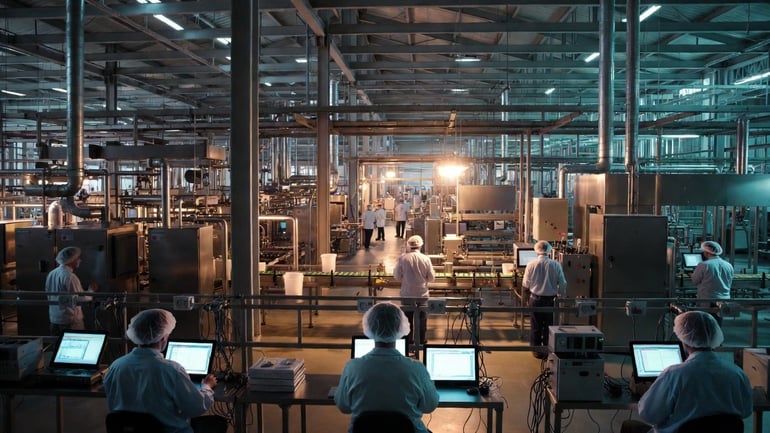
From Lavazza's connected coffee production to Monogram Foods' paperless plant floor, food and beverage manufacturers are proving the operational value of going digital.
Trends Shaping Food & Beverage Digitization
AI & Predictive Analytics
Roughly half of food and beverage industry professionals plan to invest in AI-related technologies in the near term. The primary use cases are not futuristic; they are practical: predicting equipment failure before it causes downtime, optimizing production schedules based on demand patterns, and flagging quality anomalies in real time. For operations leaders, AI means fewer surprises and better resource allocation.
Offline-First Mobile Applications
Many food and beverage facilities operate in environments where Wi-Fi and cellular coverage are unreliable, such as cold storage rooms, large warehouses, and rural processing plants. Offline-first mobile apps allow frontline workers to capture inspection data, scan barcodes, and complete checklists without an internet connection, then automatically sync when connectivity returns. This is a non-negotiable capability for any plant-floor digitization effort.
Real-Time Dashboards & Data Sharing
The shift from paper to digital is only valuable if the data collected actually reaches decision-makers. Real-time dashboards pull inspection results, production metrics, and compliance data into a single view, giving plant managers and operations leaders the visibility to act quickly. Integrated alerts and workflows ensure that critical findings do not sit unnoticed in a database.
From Paper to Mobile in 3 Steps
Getting started does not require a massive IT project. With the right platform, food and beverage teams can digitize their first process in days:
- Upload your existing paper form (or start from a template like Alpha TransForm's Gemba Walk or Non-Conformance Report app).
- Add photo capture, barcode scanning, conditional alerts, and scoring as needed.
- Deploy to mobile devices and start collecting structured, time-stamped data on the plant floor immediately.
Why Choose Alpha TransForm for Food & Beverage Digitization

Turn paper forms into mobile apps in minutes with Alpha TransForm, no IT team required.
Alpha TransForm was built for exactly the kind of challenges food and beverage manufacturers face every day: critical data collected on clipboards, inspections that never reach a dashboard, and compliance documentation that takes hours to compile. Our no-code platform lets operations teams turn paper forms into fully functional mobile apps in minutes, no IT department required.
What makes Alpha TransForm different is that it was designed for demanding real-world environments. Our apps work offline in cold storage facilities, warehouses, and production areas where connectivity is unreliable, then sync automatically when a connection is available. Built-in features such as photo capture with annotation, barcode scanning, GPS and timestamps, digital signatures, and conditional logic give your frontline teams everything they need to collect accurate, complete data in a single pass.
Your apps, when built with Alpha TransForm, integrate seamlessly with your existing business systems, so inspection data, quality scores, and compliance records flow directly into the dashboards and workflows you already use. You can start by digitizing a single form, a 5S audit, a sanitation checklist, and an equipment inspection, see the value immediately, and scale from there.
FAQs
What does digital transformation mean in food and beverage manufacturing?
What are the biggest barriers to going digital on the plant floor?
How does traceability improve with digital tools?
Can plant-floor apps work without reliable internet access?
What makes Alpha TransForm a strong fit for food and beverage manufacturers?
*Note: Alpha TransForm is a no-code app builder developed by Alpha Software. Product features, availability, pricing, and results referenced are for informational purposes only and subject to change; actual capabilities and outcomes may vary based on configuration and use case. To confirm current offerings and pricing, talk to a Solutions Consultant.





Comment