

The manufacturing industry faced several challenges in 2025. New U.S. tariff policies made the global supply chain volatile, affecting 20-40% of all activities. Labor shortages worsened, with more than 400,000 manufacturing job openings as of November 2025.
Adding to these challenges were increasing customer demands, including real-time support, customization, and sustainable practices from manufacturers. As the year drew to a close, several companies had to rethink their siloed systems and explore more agile and digitally connected workflows.
As plant managers and operations leaders navigate industry shifts in 2026, there are some emerging trends they should be mindful of. Here are 5 key predictions that will shape how manufacturers operate in 2026.
1. Digital Twins and the Rise of the Truly Connected Smart Factory
More manufacturers rely on digital twins, i.e., virtual replicas of physical systems, to optimize operations and create smart factories. In 2026, the digital twin revolution will spread and influence decisions on the factory floor.
Digital twins serve as an intuitive system for simulating and testing production processes and issues before they arise. They analyze factory conditions in real-time and can perform “what-if” analyses. In advanced cases, they even automate production decisions. They can also help manufacturers virtually flag and fix potential production issues.
This can reduce the risk of downtime or rework, eventually improving throughput. A March 2025 study conducted on digital twins found that early adopters of this system saw a 25% reduction in quality control costs. Companies also reported a 30% decrease in overall maintenance expenses.
Besides improving uptime, digital twins can also help factories manage energy consumption and production workflows to create more resilient and scalable operations in 2026.
2. Building the AI-Ready Factory: Infrastructure Decisions That Matter
Factories are already using some form of artificial intelligence (AI), either for predictive maintenance or smart quality checks. In 2026, there will be a fundamental shift in the way companies interact with AI. More companies will invest in the physical infrastructure that makes AI possible. According to a McKinsey report, a projected $6.7 trillion global investment will be required by 2030 to expand data center capacity and meet rising “compute demand.”
As the use of AI grows across industries, demand for critical systems and industrial infrastructure, from switchgear and industrial HVAC to semiconductor tooling, is rising. As a result, manufacturing operations will need to be super-scaled in various ways to support these systems, including:
- Scaling capacity to fulfil the high-volume demand for infrastructure-grade equipment.
- Forecasting demand accurately and ensuring seamless coordination across suppliers and internal teams.
- Ensuring higher operational resilience and uptime to meet infrastructure demand and prevent equipment failure.
- Prioritizing thermal performance and energy efficiency in plants – while meeting regulatory standards – as power grids face high production demands.
3. Capturing Tribal Knowledge: How Manufacturers Are Protecting Critical Expertise
Despite the increased automation in factories, human knowledge and skills remain integral to manufacturing. According to Deloitte’s 2026 outlook report, the human workforce will continue to perform 81% of all manufacturing tasks in the coming years. That said, the industry is facing a labor shortage as seasoned technicians retire and skill requirements change, leaving companies with a small pool of skilled operators.
Factory workers need better access to digital training and reskilling programs. Now is the time for companies to digitize their staff knowledge to help close the skill gap. In 2026, this will be a priority, with more companies investing in:
- Capturing tribal knowledge, i.e., deep, practical knowledge from experienced operators in a digital format, through video-guided tasks and virtual reality tools. Sharing and reusing these tacit skills with new workers will ensure that institutional know-how isn’t completely lost when more experienced operators retire.
- Building digital training platforms that teach new operators how to work with complex manufacturing systems, from smart machines to AI-powered analytics. Such support tools will shorten the onboarding process for new technicians and ensure workflows are executed predictably.
- Preserving frontline expertise and day-to-day production processes, whether through digital workflow manuals or AI-assisted instructions, so that less-experienced personnel can upskill faster.
Stop the Brain Drain: Capture Expertise Before It Retires
Don’t let decades of specialized experience walk out the door. Alpha Software helps you digitize "tribal knowledge" into interactive, AI-ready SOPs that reduce onboarding time by 40% and secure your frontline expertise.
Book a Knowledge Digitization Workshop4. Agentic AI on the Shop Floor: From Human-Led to Self-Optimizing Decisions
Traditional AI tools are remarkable at analyzing data or flagging quality issues. However, they aren’t equipped to make decisions and fix issues autonomously. Agentic AI use cases are expanding across manufacturing. As agentic AI advances in 2026, operational teams will begin relying on AI as a co-worker.
For example, agentic AI systems may recommend the best course of action in case of machine failure. Or, they may even make adjustments independently, without waiting for human intervention. This will be a stepping stone toward integrating physical AI, including the use of early humanoid robots or robotic dogs, into manufacturing processes.
According to a Manufacturing Leadership Council survey, at least 22% of companies aim to integrate physical AI into their workflows in the coming years. Instead of replacing production lines, these physical AI systems will help with high-friction tasks such as sorting and transporting materials or performing inspections in unsafe factory areas.
Agentic AI will have a huge impact in terms of making fast and more predictable decision-making on the factory floor, helping avoid unexpected downtime and quality issues. Without this foundation — what's increasingly called manufacturing AI readiness — agentic AI systems make confident decisions on unreliable data, multiplying errors at machine speed. That said, manufacturers who want to scale agentic AI in 2026 must first create a strong foundation with:
- Accurate and connected real-time data across machines and systems
- Governance that ensures AI-driven actions and decisions meet safety requirements and adhere to regulatory audits
- Training programs to work alongside autonomous machines
- Detailed processes that set boundaries for AI versus human intervention

Is Your Factory Data Ready for Agentic AI?
Agentic systems are only as effective as the data behind them. Alpha Software delivers real-time connectivity and governed data pipelines that enable autonomous decision-making on the shop floor.
Audit Your AI Data Readiness5. Sustainable Manufacturing as a Competitive and Operational Advantage
For a long time, sustainability in manufacturing was all about optics, often limited only to annual reports or marketing materials. In 2026, the focus on sustainability will shift from being just a “nice-to-have” feature to a practical necessity. Driving this demand for sustainability are rising customer pressure, energy costs, and stricter environmental regulations. As such, operations teams will need to start making changes that support this initiative and meet ESG standards, including:
- Reducing unplanned downtime through predictive maintenance, monitoring processes, and automated alerts. Since downtime consumes energy when equipment sits idle or restarts, detecting issues early helps keep operations energy-efficient.
- Regular inspection protocols and operator training can help keep defects and reworks to a minimum.
- Using advanced tools to organize production timelines and accurately forecast demand can reduce undue stress on machines, lowering energy consumption and equipment wear.
- Switching to AI-powered tools to track sustainability data and measure waste reduction can help improve day-to-day operations.
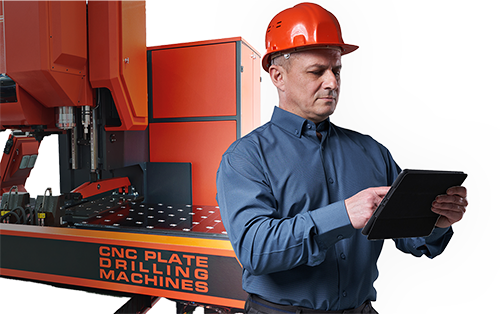
What 2026 Means for Manufacturing Quality and Continuous Improvement Teams
Manufacturing operations will focus on reducing downtime, adopting sustainable practices, and leveraging data and AI for decision-making. To keep pace, manufacturers will need to leave behind disconnected systems and manual processes and embrace more proactive problem-solving initiatives.
Choosing the Right Digital Foundation for the Next Phase of Manufacturing
Manufacturing operations are becoming increasingly complex, but handling them doesn’t have to be. Alpha Software helps you prepare for the shifts 2026 will bring, so that your teams become data-ready before adopting advanced AI systems.
- Alpha Software lends structure and visibility to your production systems. This way, teams can tap into downtime patterns, understand why bottlenecks occur, and detect quality risks before they affect the production line.
- Alpha Software helps you digitize your systems, whether by creating operational checklists or a centralized dashboard for all operational data. This creates well-connected systems and cohesive teams that better coordinate with tools such as digital twins and agentic AI.
- In the face of shifting workforce dynamics, Alpha Software can help you capture and preserve frontline knowledge and standard operating procedures (SOPs) digitally and sustainably.
- Alpha Software provides a live, real-time overview of KPIs, energy usage, and machine maintenance, enabling more resilient operations that reduce downtime, waste, and rework.
Lead the Next Phase of Manufacturing in 2026
The gap between digital leaders and laggards is accelerating. From scaling Digital Twins to operationalizing sustainability, Alpha Software helps manufacturers execute with confidence in 2026 and beyond.
Schedule a 2026 Strategy Session








Comment