
Learn how to build a manufacturing digital transformation roadmap with practical templates, real-world examples, and solutions that deliver fast ROI.
Key Takeaways
- A digital transformation roadmap helps manufacturing teams prioritize which paper processes to digitize first for maximum operational impact.
- Successful roadmaps focus on quick wins, such as inspections and audits, before scaling to complex workflows across facilities.
- Templates and frameworks simplify planning by breaking transformation into assessment, pilot, deployment, and scaling phases.
- Effective mobile solutions must function offline to prevent data loss in warehouses or remote sites with spotty connectivity.
- Alpha TransForm enables manufacturing teams to digitize forms in minutes, collect data offline, and see ROI within weeks without IT bottlenecks.
Why Manufacturing Teams Need a Digital Transformation Roadmap
Manufacturing operations generate enormous volumes of data every day through inspections, equipment checks, quality audits, and inventory counts. Yet many plants still rely on paper forms, clipboards, and manual data entry, processes that create delays, errors, and blind spots. A digital transformation roadmap provides the structure to move from paper to digital, delivering measurable results without overwhelming teams or budgets.
The challenge most manufacturers face isn't a lack of technology options—it's knowing where to start and how to sequence changes so each step builds on the last. A roadmap solves this by identifying high-impact processes, setting realistic timelines, and establishing success metrics before any technology gets deployed. Without this planning, digital initiatives often stall after a pilot project or fail to scale beyond a single facility.
|
Alpha TransForm: Digital Solutions to Collect, Analyze, and Act on Data Turn Paper Forms Into Mobile Apps in Minutes | No IT Team Required | Works Offline | Trusted by Manufacturing & Field Teams  Why Business Leaders Choose Alpha TransForm: ✓ Built-in custom dashboards and workflows to trigger business activity✓ Seamless integration with existing business systems ✓ Replace Excel with digital data collection and analysis ✓ Rapid digitization—build apps in days without IT bottlenecks ✓ Proven ROI with scalable start-small approach ✓ Trusted by manufacturing, construction, and healthcare leaders From Paper to Digital in 3 Steps 1. Upload your paper form or start from scratch2. Customize fields and logic as needed 3. Deploy to mobile devices and start collecting data instantly Stop losing time with paper processes. Start delivering business value today.
|
Core Phases of a Manufacturing Digital Transformation Roadmap

Four-phase manufacturing digital transformation roadmap covering assessment, pilot testing, deployment, training, and continuous improvement scaling.
Phase 1: Assessment & Goal Setting
Every roadmap begins with understanding the current state. This means documenting which processes still run on paper, where data gets lost or delayed, and what outcomes matter most to operations leaders. Common starting points include safety inspections, Gemba walks, 5S audits, equipment maintenance logs, and receiving checklists. The goal is not to digitize everything at once but to identify three to five processes where eliminating paper will deliver visible improvements in speed, accuracy, or compliance.
Phase 2: Pilot & Validation
Once priority processes are selected, the next phase involves building and testing digital versions with a small team. This pilot should take days, not months. The focus is on validating that mobile forms capture the right data, work reliably in plant conditions (including areas with limited connectivity), and integrate with existing reporting workflows. Success at this stage means frontline workers can complete tasks faster and supervisors can access data in real time.
Phase 3: Deployment & Training
With a validated pilot, the roadmap moves to broader rollout. This includes deploying mobile apps to additional teams, training users on new workflows, and establishing processes for handling exceptions. The best deployments empower business users to make adjustments without waiting for IT support—whether adding fields, changing logic, or creating new forms as needs evolve.
Phase 4: Scaling & Continuous Improvement
The final phase extends digital workflows across facilities and functions. This is where the roadmap becomes a living document, updated as new processes get digitized and new opportunities emerge. Dashboards and analytics help leaders track adoption, measure time savings, and identify the next candidates for transformation.
Templates for Planning Your Manufacturing Transformation
A practical roadmap template organizes planning into four components: process inventory, prioritization criteria, timeline milestones, and success metrics. Rather than starting from scratch, manufacturers can use publicly available templates and assessment tools.
NIST MEP Digital Transformation Improvement Planning Tools (Ohio MEP).
The DTM Improvement Planning toolkit is available as a downloadable Excel worksheet and supporting Word documents that help manufacturers create actionable roadmaps following their digital maturity assessment. The Excel-based Improvement Plan template works alongside detailed implementation instructions and a Digital Improvement Project Primer to guide teams through the planning process.
The toolkit also includes a Digitization KPIs document for tracking success metrics and a Problem-Solving Tools & Techniques guide for prioritization. These materials help teams document digital-improvement actions, establish timelines, assign responsibilities, and track progress toward removing constraints identified in the assessment.
Revitalizing America's Manufacturing Workforce: A Manufacturing USA National Roadmap
This comprehensive strategic planning framework is available as a downloadable PDF outlining a national approach to manufacturing transformation across three priority areas: equipping the workforce with evolving skills, broadening access to career pathways, and sparking interest in manufacturing careers.
The roadmap provides a structured methodology for manufacturers to align their transformation initiatives with national priorities while developing implementation plans. A companion Advanced Manufacturing Occupation and Competency Framework is also available as a PDF, offering detailed competency mapping across 13 core competencies and five technology areas to help manufacturers assess workforce capabilities and plan training investments.
Examples: Manufacturing Digital Transformation in Action
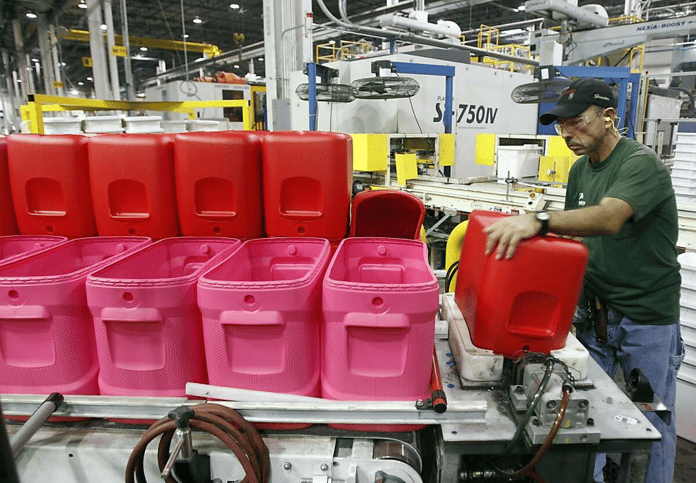
Igloo Products Corporation digitized quality control processes, eliminating paper-based audits and achieving cost savings.
Igloo Products Corporation (Katy, Texas) - Quality Control Digitization Saving $145,000 Annually.
Founded in 1947, Igloo Products is the world's number one cooler manufacturer. The company operates a 1.8-million-square-foot facility in Katy, Texas, with 121 molding machines and 18 assembly lines, producing 18 million coolers annually for over 110,000 retail locations worldwide.
As part of their Igloo Quality IQ365 program, Quality Control Manager John Ng led a digital transformation to eliminate paper-based quality audits and move to 100% paperless operations. Using Alpha TransForm's no-code app builder, Igloo digitized quality control forms for blow molding, injection molding, and vacuum forms, consolidating four different paper form types into a single digital form deployed on iPads.
The system now provides real-time dashboards showing machine status with color-coded indicators, automated notifications for quality technicians, and instant searchable access to historical quality data with embedded photos. The transformation achieved $145,000 in cost savings, eliminated data transcription errors (such as misreading handwritten numbers), dramatically reduced time spent searching through paper records for root cause analysis, and enabled capture of new defect types.
Previously, auditors spent hours searching through boxes of stored paper forms; now they can search by date and instantly retrieve digital forms with photos, accelerating problem resolution and improving overall product quality control.
Blendco (Hattiesburg, Mississippi) - Automation Implementation for 100% Capacity Increase (NIST MEP).
Blendco, a dry-food blending and contract packaging company, faced production capacity constraints that hindered growth. Working with the Mississippi Manufacturing Association MEP Center at Pearl River Community College, the company automated its vertical forming and seal production line.
The digital transformation case study documents how this automation project increased daily production from under 500 to over 1,000 units, enabling Blendco to meet growing customer demand and secure new contracts.
Choosing Solutions That Fit Manufacturing Realities
Not every digital tool fits the realities of manufacturing environments. Solutions need to work offline in warehouses, plants, and field locations where connectivity is unreliable. They need to be simple enough for frontline workers to adopt without extensive training. And they need to deliver value quickly so operations leaders can demonstrate ROI and justify broader investment.
The most effective solutions let business users build and modify mobile apps without relying on IT departments. This removes bottlenecks and ensures that the people closest to the work can shape the tools they use. Features such as photo capture, barcode scanning, conditional logic, offline capabilities, and real-time dashboards turn basic forms into powerful data-collection and workflow tools.
Why Alpha TransForm Powers Manufacturing Digital Transformation

Alpha TransForm enables manufacturing teams to digitize paper forms into offline-capable mobile apps without coding or IT support.
At Alpha Software, we built Alpha TransForm specifically for the challenges manufacturing and field teams face every day. Our platform lets business users turn paper forms into mobile apps in minutes, without writing a single line of code or having programming experience. When supervisors need to digitize a safety inspection or add a field to an equipment checklist, they can do it themselves and deploy changes immediately.
What sets Alpha TransForm apart is its reliability in demanding environments. Apps built with Alpha TransForm work fully offline, capturing photos, signatures, GPS coordinates, and timestamps—even in warehouses, oil fields, and remote facilities with no connectivity. Data syncs automatically when the connection returns, so nothing gets lost.
We designed Alpha TransForm for fast ROI. Customers can start small, digitizing a few high-impact forms, and scale up as they see results. Built-in dashboards and integrations with existing business systems ensure data flows where they need to go without manual re-entry. Manufacturing, construction, healthcare, and field operations teams trust Alpha TransForm to replace paper and spreadsheets with digital workflows that deliver measurable efficiency gains.
Ready to build your manufacturing digital transformation roadmap?
FAQs
What is a manufacturing digital transformation roadmap?
How long does it take to implement digital transformation in manufacturing?
What processes should manufacturers digitize first?
Do digital transformation solutions work offline in plants?
What makes Alpha TransForm different for manufacturing teams?
*Note: Alpha TransForm is a no-code app builder developed by Alpha Software. Product features, availability, pricing, and results referenced are for informational purposes only and subject to change; actual capabilities and outcomes may vary based on configuration and use case. To confirm current offerings and pricing, talk to a Solutions Consultant.






Comment