

Digitize clinical audits with mobile checklists that work offline. Free hospital templates and no-code apps to improve compliance and patient safety.
Key Takeaways
- Clinical audit checklists provide a structured framework for hospitals to evaluate care quality, identify compliance gaps, and drive measurable improvements in patient outcomes.
- Digital checklists with photo capture, timestamps, and real-time alerts eliminate paper delays and manual errors, ensuring faster corrective action and stronger audit trails.
- Free downloadable PDF templates offer hospitals a practical starting point for infection control, medication safety, equipment maintenance, and admission process audits.
- No-code app builders empower clinical staff to build and customize audit apps in hours without IT support, reducing bottlenecks and accelerating compliance initiatives.
- Alpha TransForm delivers offline-first mobile audit apps that integrate with hospital systems, helping healthcare teams digitize inspections, automate workflows, and improve patient safety.
What Is a Clinical Audit Checklist?
A clinical audit checklist is a structured tool used by hospitals to systematically evaluate whether patient care, clinical processes, and operational procedures meet established quality standards and regulatory requirements.
These checklists guide healthcare teams through a consistent evaluation framework, helping identify gaps in care delivery, compliance issues, and opportunities for improvement.
Clinical audits typically follow a five-stage cycle: preparation and planning, setting standards or criteria, measuring current performance, implementing necessary changes, and sustaining improvements over time.
A well-designed checklist supports each stage by documenting what was evaluated, what was found, and what actions were taken.
|
Alpha TransForm: Digital Solutions to Collect, Analyze, and Act on Data Turn Paper Forms Into Mobile Apps in Minutes | No IT Team Required | Works Offline | Trusted by Manufacturing & Field Teams  Why Business Leaders Choose Alpha TransForm: ✓ Built-in custom dashboards and workflows to trigger business activity✓ Seamless integration with existing business systems ✓ Replace Excel with digital data collection and analysis ✓ Rapid digitization—build apps in days without IT bottlenecks ✓ Proven ROI with scalable start-small approach ✓ Trusted by manufacturing, construction, and healthcare leaders From Paper to Digital in 3 Steps 1. Upload your paper form or start from scratch2. Customize fields and logic as needed 3. Deploy to mobile devices and start collecting data instantly Stop losing time with paper processes. Start delivering business value today.
|
Why Hospitals Are Moving from Paper to Digital Audit Checklists

Many hospitals still rely on paper forms for clinical audits, but this approach creates significant operational challenges. Paper checklists are easily lost or damaged, handwriting can be illegible, and transferring data into reporting systems introduces delays and transcription errors.
Mobile audit apps allow clinical staff to complete inspections directly on smartphones or tablets, with built-in validation rules that prevent incomplete or inaccurate entries. Conditional logic guides users through the right questions based on previous answers, ensuring nothing gets skipped. Every audit is automatically time-stamped and logged, creating an instant audit trail for regulatory compliance.
Hospital environments often have connectivity challenges, especially in basements, equipment rooms, or remote clinic locations. Good digital audit apps built for healthcare work entirely offline, storing data securely on the device and syncing automatically once a connection is restored. This ensures audits continue without interruption and no data is ever lost.
Digital audit apps eliminate paper-based inspection challenges with offline functionality,
automatic timestamps, and customizable workflows.
No-code app builders like Alpha TransForm allow clinical audit coordinators and quality managers to build their own audit apps in hours. You can start with a template, customize fields and workflows to match your hospital's specific protocols, and deploy to your team immediately. Need to add a new compliance requirement? You can make changes yourself in minutes without filing IT tickets or waiting for developers.
Clinical Audit Checklist Examples for Hospitals
Infection Control Audit Checklist
This checklist evaluates practices that prevent healthcare-associated infections (HAIs). Key audit items include hand hygiene compliance, proper use of personal protective equipment (PPE), sterilization procedures, environmental cleaning protocols, safe handling of medical waste, isolation precautions, and catheter care bundles.
Auditors can use photo capture to document PPE storage areas or hand hygiene stations, with automatic alerts notifying infection control teams when violations are detected.
Patient Safety & Medication Management Checklist
Medication errors are a leading cause of preventable patient harm. This checklist covers accuracy of medication orders, proper patient identification (two-identifier verification), correct dosage and timing, double-check procedures for high-risk medications, adverse drug event reporting, patient fall risk assessment, and medication reconciliation at admission and discharge.
Digital checklists with barcode scanning can verify medication codes against patient records, reducing administration errors.
Equipment & Facility Safety Checklist
This checklist ensures medical devices are properly maintained and functional by covering routine inspection schedules, calibration verification, functional testing of emergency equipment such as defibrillators, crash carts, and ventilators, and checks for proper storage of emergency supplies, fire safety equipment, electrical safety, and environmental conditions.
Inspectors can attach photos of equipment serial numbers or identified hazards, with GPS tagging to document exact locations.
Admission & Discharge Process Checklist
This type of checklist evaluates the timeliness of admission processing, the completeness of the initial patient assessment, the initiation of discharge planning, patient education, accurate discharge documentation, medication reconciliation, and the scheduling of follow-up appointments.
Free Clinical Audit Checklist Template
HQIP Clinical Audit Report Template & Guide
The Healthcare Quality Improvement Partnership Clinical Audit Documentation Guide provides a comprehensive framework for the full clinical audit cycle, including executive summary templates and traffic-light rating systems for compliance tracking.
It also covers detailed audit protocol development and data collection methodology, standards selection with evidence-based criteria, action planning with SMART objectives and root cause analysis, and progress monitoring supported by measurable improvement evidence.
The guide includes practical examples of how to structure clinical audit reports, handle patient confidentiality, and present findings to stakeholders across different organizational levels, from clinical teams to Trust Boards.
Why Alpha TransForm Works for Hospital Audits
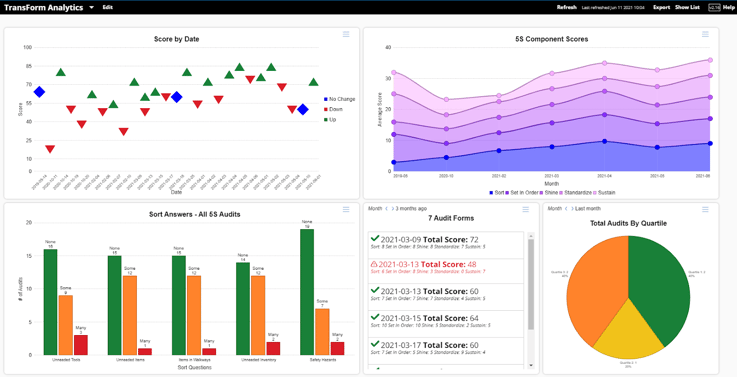
Alpha TransForm is explicitly built for teams that need reliable, offline-first mobile apps without the complexity or delays of traditional software development. Clinical audit coordinators, quality managers, and department supervisors can digitize their audit processes in hours—just as manufacturing quality teams digitize Gemba walks and 5S audits without IT involvement.
Our no-code app builder’s patented offline-first technology ensures data is captured reliably even in basements, equipment storage areas, or remote clinic sites. All audit data is stored securely on the device and syncs automatically when the connection is restored, so nothing is ever lost.
Auditors can complete inspections on any smartphone or tablet, with features designed for fast data entry. Photo capture with markup, barcode scanning, GPS tagging, timestamps, and digital signatures all happen within the app, creating richer documentation than paper ever could.
Alpha TransForm enables hospital teams to create custom audit apps in under 30 minutes,
using offline-first technology and direct integration with existing hospital systems.
Apps built with our platform integrate with systems hospitals already use, including Electronic Health Records (EHRs), quality management platforms, SQL databases, and reporting tools. Audit data flows directly into your core systems, eliminating double-entry and ensuring compliance records are always current.
With Alpha TransForm, a hospital supervisor can create and launch an audit app in under 30 minutes. Common use cases include infection control audits, medication safety checks, equipment inspections, environmental rounds, and regulatory compliance documentation. As needs evolve, you can update forms and workflows yourself without IT involvement.
Frequently Asked Questions (FAQs)
What is the difference between a clinical audit and a compliance inspection?
A clinical audit is an internal quality improvement process in which healthcare teams evaluate their practices against established standards and implement changes to improve care.
A compliance inspection is typically conducted by external regulatory bodies to verify adherence to legal or accreditation requirements.
How often should hospitals conduct clinical audits?
Audit frequency depends on the area being evaluated and regulatory requirements. High-risk areas like infection control, medication administration, and emergency equipment should be audited monthly or quarterly.
Lower-risk processes might be reviewed annually. After implementing corrective actions, re-audits should occur within 30 to 90 days to verify effectiveness.
Can digital audit apps integrate with our existing hospital systems?
Yes, modern no-code platforms are designed to integrate with hospital information systems, EHRs, quality management software, and compliance databases.
Alpha TransForm supports integration with SQL databases, Excel, and enterprise systems commonly used in healthcare, ensuring audit findings are immediately accessible for reporting during regulatory reviews.
What happens if staff lose internet connection during an audit?
With offline-first mobile apps like those built on Alpha TransForm, internet connectivity is never a barrier. All audit data is captured and stored securely on the mobile device, even in areas with no network coverage.
Once the device reconnects, all information automatically syncs with the central system, ensuring uninterrupted audits and eliminating the risk of data loss.
*Note: Pricing and/or product availability mentioned in this post are subject to change. Please check the retailer's website for current pricing and stock information before making a purchase.






Comment