
Business leaders and factory managers face one pressing question when measuring operational performance: “What key performance indicators (KPIs) should we be using?” The answer isn’t simple, because each business faces different constraints and priorities that shape its distinct set of KPIs.
When measuring KPIs, companies either monitor vanity metrics that don’t provide an accurate picture of performance or use too many metrics that dilute the true impact of results.
When companies use metrics that don’t reflect the reality of their shop floor, they risk tracking conflicting metrics. Or, they end up optimizing one dimension at the expense of another.
For example, a factory that produces customized components for various customers may prioritize a metric like Overall Equipment Effectiveness (OEE). This can result in a rigid workflow that slows deliveries and hurts customer satisfaction, raising the question – how do you know which set of metrics to track?
Operational excellence coach Alper Ozel provides an insightful framework inspired by Japanese manufacturing that can help leaders measure performance from a balanced yet practical perspective. Using this can help companies track KPIs that are relevant to their field and business.
In this post, we’ll help you understand Ozel’s framework in detail. We’ll also discuss how Alpha Software can help you turn your KPI strategy into real improvements on the factory floor.
PQCDSM Explained: A Balanced KPI Framework for Manufacturing Excellence
Instead of relying on walls of metrics to measure operational performance, Ozel’s KPI framework suggests a more intentional approach. He proposes organizing KPIs into six core pillars rather than viewing them as individual metrics. This can help operational leaders assess performance from a macro perspective.
Ozel refers to the six-pillar model simply as PQCDSM. It has the following metrics:
P: Productivity: This metric tracks how effectively you are using resources and how your output meets customer requirements. Some key productivity KPIs are:
- Overall Equipment Effectiveness, or OEE, determines whether your equipment is running at optimal capacity to produce the target output.
- Throughput measures the rate at which a process produces finished units.
- Capacity Utilization refers to the extent to which a plant uses available productive capacity.
- Units Per FTE (Full Time Equivalent) is a metric of labor productivity that measures the number of units produced by a full-time worker.
Q: Quality: This metric ties excellence to a tangible, measurable goal, and is typically tracked through these indicators:
- First Pass Yield, which refers to the rate of produced goods that meet quality standards in the first run, without requiring repair or rework.
- The Frequency of Warranty or Claims indicator helps manufacturers measure quality against the number of failures or issues reported after the delivery of a product.
- Rework and Defect Rates track the number of products that fail quality standards or require rework.
C: Cost: Cost KPIs help companies strike a balance between operational excellence and profitability. They ensure one doesn’t come at the cost of the other, helping manufacturers adhere to their budget through these indicators:
- Cost Per Unit, which is the total cost of producing a single product unit.
- Inventory Turnover measures the rate at which raw materials become finished goods.
- Cost of Poor Quality refers to the financial costs incurred by quality failures.
- Return on Assets, or ROA, is the company’s ability to generate profit from its assets, such as raw materials and equipment.
D: Delivery: This metric measures the consistency with which companies can meet customer expectations.
- On-Time, In-Full, or OTIF, represents the delivery of all orders on time and in the promised quantity.
- Lead Time refers to the total period from the time of placing an order to the time of delivery.
- Delivery Reliability measures the rate at which a company fulfils its promised deliveries.
S: Safety: The safety metric is the backbone of manufacturing compliance regulations, helping companies meet their production targets while maintaining a safe workplace.
- Total Recordable Incident Rate, or TRIR, measures the total record of worker injuries on the floor during production.
- Incident Rate tracks the frequency with which accidents or injuries occur on the manufacturing floor.
- Near Miss Count is a metric measuring potentially unsafe incidents that companies were able to avert eventually.
M: Morale: Cost, quality, and delivery aren’t the only factors integral to excellent performance. Measuring employee morale helps leaders address systemic issues early on, through indicators such as:
- Employee Net Promoter Score or eNPS is a score of general work satisfaction and loyalty. It also measures the likelihood that an employee will recommend or promote their workplace to others.
- Turnover and Absenteeism tracks the rate of attrition and tardiness in the workplace.
- Suggestion Counts and Engagement monitors the frequency at which employees actively participate in or contribute to ideas and workplace improvement efforts.

Stop Managing Metrics. Start Driving Manufacturing Performance.
A balanced KPI framework only works when it’s actionable. If your teams are buried in numbers but starved for insight, it’s time to reset. We’ll audit your shop floor data and map a focused PQCDSM roadmap tied directly to operational and ROI impact.
Book a KPI Strategy AuditHow to Implement Balanced KPIs for Sustainable Manufacturing Growth
Ozel’s proposed model values context and balance while using metrics, helping you build a solid KPI program your team can act on while avoiding the confusion and metric fatigue most companies struggle with.
After determining the right KPIs, Alpha Software can help you integrate them into your operational workflow so they can begin influencing real outcomes on the shop floor.
Here’s how Alpha Software can help companies strengthen their KPI strategy.
Connecting Disparate Manufacturing Systems for Real-Time Operational Visibility
If you’re tracking just one metric, you’re losing out on the bigger picture. For example, downtime is a common challenge for companies. However, you can’t attribute it to a single failure. Several factors can cause it, from cost pressure and quality issues needing rework to disengaged teams. When tracking this metric in isolation, companies often miss the underlying connections and patterns causing it.
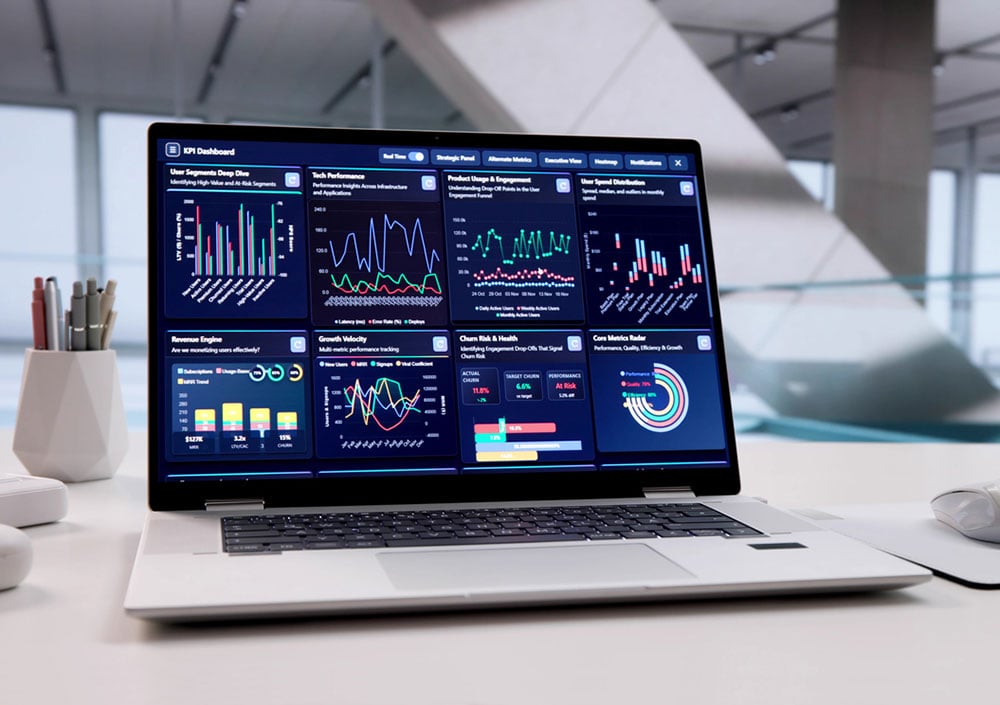
This is where Alpha Software ties in with the PQCDSM model by bringing disparate systems together and unifying them into a centralized dashboard where you can measure performance at every level. As a result, your manufacturing teams can better spot early warning signs and patterns that can prevent downtime.
Unify Your Shop Floor and Office with Real-Time Visibility
Lagging reports lead to reactive decisions. Alpha Software connects your fragmented manufacturing systems into a single, real-time dashboard—so teams can spot issues early, act faster, and maintain 24/7 operational control.
Request a Real-Time Visibility DemoBuilding Custom KPI Dashboards for Manufacturing Teams
Alpha Software’s low-code solutions can help companies quickly build customized dashboards and apps that help translate metrics into day-to-day outcomes. For example, quality teams can oversee rework and defects, or track first-pass yield rates as they happen, rather than reviewing them after an incident has occurred.
At the same time, maintenance teams can receive equipment health reports or snapshots of open issues in real time, helping avoid potential breakdowns. The real value of customized KPI apps is that they integrate easily into the daily workflow. The bottom line: they don’t limit metrics to just figures on a dashboard. Instead, they relay critical information at the right time so factory managers can make smarter decisions.
From KPIs to Predictive Analytics in Manufacturing Operations
Ozel’s PQCDSM model organizes KPIs into clear, balanced groups. It helps company leaders understand that performance issues in one area may indicate risks in another. For example, poor OTIF rates could be connected to understaffing or equipment issues.
When such patterns emerge early on, companies can change course instead of reacting after the fact. With Alpha’s specialized software, teams can predict potential issues across various parameters, whether by flagging high defect rates and slow machine output or warning teams about misaligned inventory.
Turn Your KPI Strategy into Measurable Operational Results
The idea that a single metric can measure operational excellence is simplistic; rather, it’s how various metrics interact in complex, unique systems that drive excellence. Alper Ozel’s model understands this fact well. It also resonates with the kind of performance measurement goals the Alpha Software team strives for each of our customers:
- Support informed and insightful decision-making based on data and trends
- Enable ongoing improvement on the factory floor
- Prevent old issues and errors from resurfacing
- Help teams act proactively and intelligently instead of burdening them with reports and delayed metrics.
While balanced KPIs are fundamental to operational excellence, they’re only effective as long as you connect them to day-to-day work systems.

Turn Your KPI Strategy into Measurable Operational Results
Stop relying on vanity metrics and hindsight reporting. Partner with Alpha Software to digitize operational excellence, equip managers with predictive insights, and scale performance across the shop floor.
Consult with an Operational Excellence Expert








Comment