
Artifiical intelligence is impacting software development at a rapid rate.
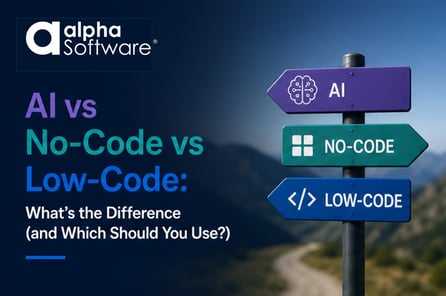 Today, organizations can build applications using:
- AI-generated tools
- no-code platforms
- low-code platforms
At first glance, these approaches seem similar. They all promise faster development and lower costs.
But they solve very different problems.
Understanding the difference is critical—especially if your goal is to build applications that actually work in real-world business operations.
 What Is AI App Development?
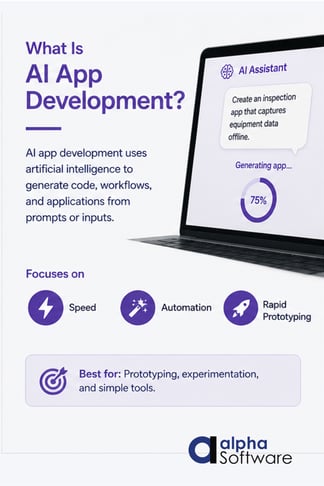
AI app development uses artificial intelligence to generate code, workflows, and applications based on prompts or inputs.
This includes:
- AI-generated apps
- “vibe coding”
- AI-assisted development tools
AI focuses on:
- speed
- automation
- rapid prototyping
If you're new to this concept, you can learn more in our guide to AI app development that works in real-world operations.
 What Is No-Code Development?
No-code platforms allow users to build applications without writing code.
They use:
- drag-and-drop interfaces
- pre-built components
- visual workflows
No-code focuses on:
- accessibility
- ease of use
- fast development
Examples include tools like Alpha TransForm, Bubble and Glide.
 What Is Low-Code Development?
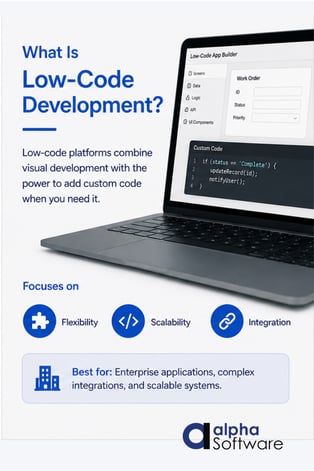
Low-code platforms combine visual development tools with the ability to write custom code when needed.
They are typically used by:
- developers
- IT teams
- enterprise organizations
Low-code focuses on:
- flexibility
- scalability
- integration
Examples include Alpha Anywhere, Microsoft Power Apps, Outsystems and Mendix.
Key Differences Between AI, No-Code, and Low-Code
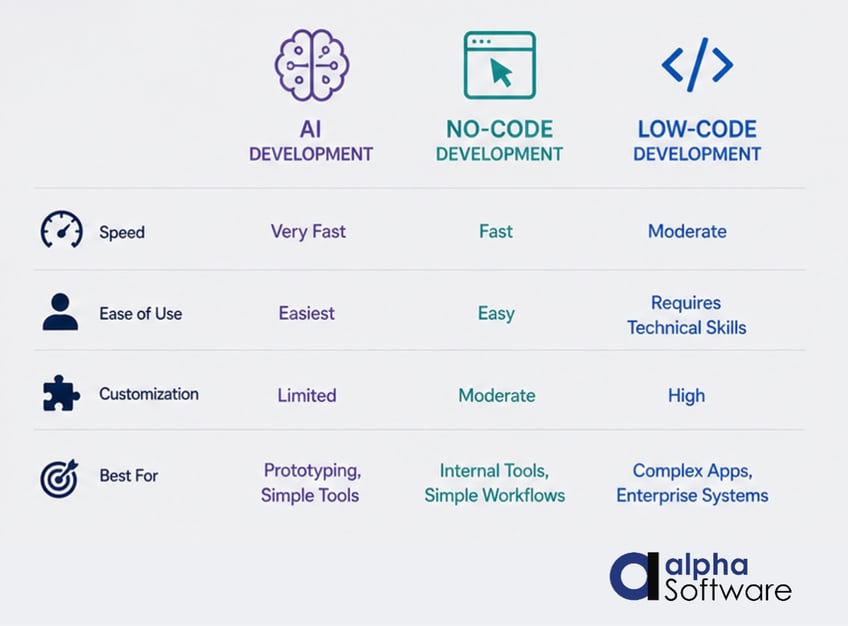 Speed vs Control
- AI: fastest, but least controlled
- No-code: fast, structured
- Low-code: slower, but more flexible
Ease of Use
- AI: easiest to start
- No-code: easy with some structure
- Low-code: requires technical knowledge
Customization
- AI: limited to generated outputs
- No-code: moderate flexibility
- Low-code: highly customizable
Reliability in Real-World Use
-
- AI: low reliability for operational apps
- No-code: moderate reliability
- Low-code: higher reliability (when properly built)
Where Each Approach Works Best
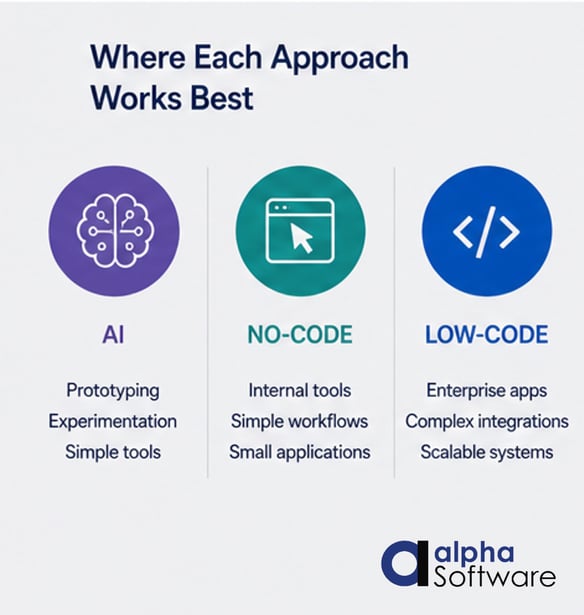 AI
AI
Best for:
- prototyping
- experimentation
- simple tools
No-Code
Best for:
- internal tools
- simple workflows
- small applications
Low-Code
Best for:
- enterprise applications
- complex integrations
- scalable systems
Where These Approaches Fall Short
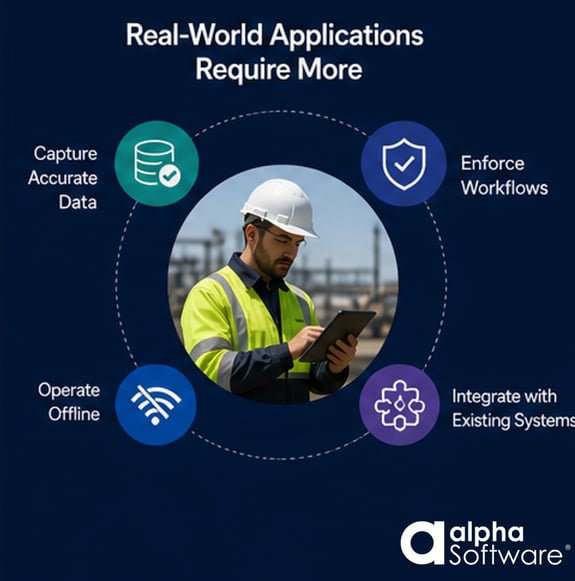 This is where many teams run into problems.
Real-World Environments
Most tools assume:
- consistent connectivity
- controlled usage
Real-world operations are unpredictable.
Data Quality
Tools can generate apps—but they don’t guarantee data quality.
As we’ve covered in why data quality is the Achilles heel of AI, poor data undermines even the most advanced systems.
(Link to Achilles page)
Workflow Enforcement
In real operations:
- processes must be followed
- data must be consistent
Most tools don’t enforce this.
Offline Capability
Many environments require apps to function without internet access.
Most AI and no-code tools struggle here.
The Real Question: What Are You Actually Trying to Build?
This is where most comparisons miss the point.
The question isn’t:
Which tool is best?
The question is:
What problem are you solving?
If you’re building:
- a prototype → AI works
- a simple tool → no-code works
- a complex system → low-code helps
But if you’re building an application that must:
- operate in real-world environments
- capture accurate data
- enforce workflows
- integrate with existing systems
You need more than a development tool.
How Alpha Software Fills the Gap
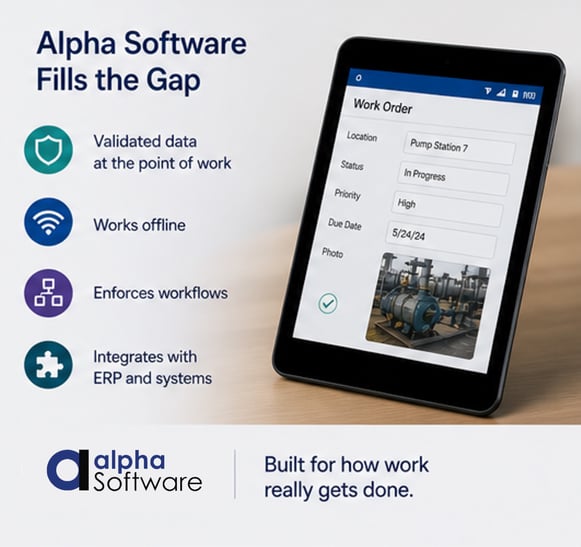 This is where Alpha Software is designed to operate.
Using Alpha TransForm, organizations can build applications that:
- capture validated data at the point of work
- operate offline
- enforce workflows
- integrate with ERP and backend systems
Instead of focusing only on development speed, Alpha Software focuses on building systems that work in real-world operations.
A Critical Eye on Real-World App Use
AI, no-code, and low-code all play important roles in modern development.
But they are not interchangeable.
The organizations that succeed understand when to use each approach—and when to move beyond them to build systems that actually work.
Need a Business App for Your Organization? Let us Help
If you're evaluating AI, no-code, or low-code platforms and need something that meets real enterprise needs for your operation, book a meeting with Alpha Software and we’ll help you choose the right approach and build a production-ready solution. Click on the link to book a brief meeting at your convenience. In 10 minutes you'll be able to determine if we're a fit and understand next steps. In most cases, customers have their app up and running in just days.









Comment