
 Modernizing Field Operations: Solving the Data Gap
Most field service failures aren't caused by a lack of software but by a failure to capture accurate data at the "moment of work." While many organizations invest in low-code software licenses to digitize forms, the real challenge lies in bridging the gap between rugged field reality and the clean data required by your ERP.
Alpha Software provides specialized operational business solutions designed to solve these complexities. By prioritizing data validation at the point of entry and building workflows that match how technicians actually work, we help companies eliminate incomplete reports, bypass manual workarounds, and ensure their systems of record are fueled by 100% accurate, real-time field intelligence.
Most companies already have field service software, yet:
- Reports are incomplete
- Data is entered late
- Technicians work around the system
- Spreadsheets and paper still show up everywhere
The problem usually isn’t the software. It’s how the data gets captured in the field.
The Real Problem With Field Service Apps
Field service platforms are designed to manage work.
- schedules
- work orders
- customers
- billing
But the most important part is often the weakest link. This is the moment of work, where employees collect and capture data for things like inspections or punch lists.
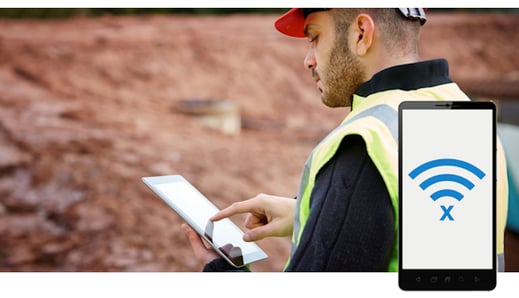 They break because the existing system isn't optimized for how the work gets done:
- Too many steps to enter data
- Forms don’t match real workflows
- Field teams skip steps to save time
- Data gets filled in later (or guessed)
- Apps don't work in remote locations
By the time it reaches your system, the data is already compromised.
The Gap Between Field Work and Your System of Record
Most companies rely on systems like ERPs or field service platforms to run the business. People rely on the data and analysis these systems provide, but systems don’t create that data. They depend on it.
Field = where data is created
ERP / FSM = where data is stored and reported
In between is where things go wrong.
- Missing details
- Incorrect entries
- Delayed updates
- No proof of work
This is why dashboards look fine—until something breaks. Closing this gap is the foundation of ERP execution data integrity — validated, point-of-work data that prevents your system of record from inheriting field-level errors in the first place.
What High-Performing Field Service Apps Actually Do
 The goal isn’t to simply digitize forms. It’s to capture accurate, validated data at the moment work happens.
That means:
Validate data at the point of entry
- Required fields
- Logic-driven inputs
- Prevent incomplete or incorrect submissions
Capture proof of work automatically
- Photos tied to specific tasks
- Time and date stamps
- GPS location verification
Work fully offline
Field teams don’t always have a signal.
Apps should:
- function without connectivity
- sync automatically when back online
Match real-world workflows
Not generic templates.
Real workflows include:
- conditional steps
- dynamic forms
- job-specific logic
Integrate cleanly with your existing systems
Data should flow directly into:
- ERP systems
- field service platforms
- reporting tools
Without rekeying or manual cleanup.
Why Most Field Service Apps Fail
Even when companies invest in mobile tools, adoption often breaks down.
Here’s why:
They’re built for the office, not the field.
Too many clicks. Too rigid. Too slow.
They don’t match how work actually happens.
So technicians create workarounds.
They rely on users to “do the right thing.”
Instead of enforcing it through validation.
They add effort instead of removing it.
If it slows people down, it won’t get used.
What to Look For in a Field Service App
If you’re evaluating solutions, focus on these criteria for field service apps:
- Can it mirror your exact workflow, not force a template?
- Does it validate data as it’s entered?
- Does it work offline without limitations?
- Can field teams use it quickly with minimal training?
- Does it integrate with your ERP or field service system?
If not, you’ll likely end up with:
- partial adoption
- inconsistent data
- continued reliance on spreadsheets and paper forms or notes
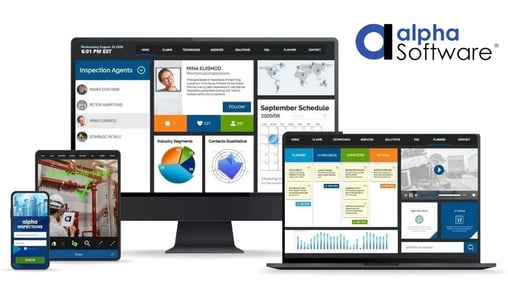 Alpha Software Solutions Improve Data Collection at the Point-of-Work
Most companies don’t need to replace their existing systems. They need to fix how data gets into them.
Alpha Software industry solutions help capture accurate, validated field data at the point of work, especially when standard field service platforms don’t match real-world workflows.
- Solutions around how your team actually works.
- Apps that capture complete, validated data in the field.
- Seamless integration that syncs clean data into your systems of record
Our solutions are helping companies deal with construction worker shortages. inventory data accuracy, mitigating unplanned manufacturing downtime, and more.
See How to Dramatically Improve the Data Your Organization Depends On
Bring us one of your current field forms or workflows. We’ll quickly show you a solution built around your process, not a generic template. Our proprietary technology allows us to produce field apps and analysis tools for you in just 1-2 days. We can then have them running at your organization in weeks or even days.
Book a meeting to get started.
Why Operational Excellence Requires More Than Just a License
Closing the gap between the field and the office requires more than just a digital version of a paper form; it requires a solution that enforces business logic where the work happens. This is where the distinction between "software" and "solutions" becomes critical.
At Alpha Software, we solve construction operations problems by focusing on the "Point of Work." We understand that for a field service app to succeed, it must provide:
- Hardened Data Validation: Preventing errors before they reach your database.
- Operational Context: Building apps that mirror complex, real-world workflows rather than forcing users into rigid templates.
- System Integrity: Ensuring seamless integration so that your high-level ERP or FSM platform is never compromised by "dirty" data from the field.
Field Service Apps FAQ
What is a field service app?
A field service app is a mobile app that lets technicians do things like execute work orders, inspections, and data-gathering chores right from the field using a smartphone or tablet.
Why do field service apps fail?
Most of them fail because they don't fit real workflows, need too many steps, and depend on people to submit correct data without checking it. This makes it hard for people to use and get credible data.
What features should a well-built field service app have?
Some of the most important features include the ability to operate offline, check data, take photos, track GPS locations, customize workflows, and connect to backend systems like ERP or FSM platforms.
Can field service apps work offline?
Yes. The top field service apps work without an internet connection because of the frequency of remote fieldwork.
How do field service apps improve corporate data accuracy?
They make things more accurate by checking inputs at the point of work or point of data entry; requiring full submissions; and collecting proof of work like images, timestamps, and location data.








Comment