
Download free mining equipment maintenance checklist templates and learn how Alpha TransForm digitizes inspection workflows to prevent downtime.
Key Takeaways
- Mining equipment maintenance checklists prevent catastrophic failures, reduce unplanned downtime, and ensure regulatory compliance in mining operations.
- Standardized checklist templates create consistency across shifts and sites while building comprehensive maintenance histories that inform predictive maintenance strategies.
- Digital maintenance apps eliminate paper delays by enabling real-time defect reporting, automated work order generation, and immediate supervisor notifications when critical issues are detected.
- Offline-capable mobile maintenance apps ensure inspections continue seamlessly in areas with unreliable connectivity, automatically syncing data when connections return.
- Alpha TransForm converts paper maintenance forms into customizable mobile apps in hours, empowering mining equipment maintenance supervisors to deploy inspection solutions without IT dependencies.
Understanding Mining Equipment Maintenance Checklists
Mining equipment maintenance checklists provide structured frameworks for inspecting and documenting the condition of heavy machinery operating in demanding environments.
These systematic tools guide technicians through critical inspection points covering hydraulic systems, structural components, safety devices, electrical systems, and wear parts.
Effective maintenance checklists serve multiple operational functions:
- They establish accountability by documenting who performed inspections and when.
- They create early warning systems by tracking deterioration patterns before failures occur.
- They support regulatory compliance by providing auditable records of maintenance activities.
- They prevent the catastrophic equipment failures that shut down operations and endanger personnel.
|
Alpha TransForm: Digital Solutions to Collect, Analyze, and Act on Data Turn Paper Forms Into Mobile Apps in Minutes | No IT Team Required | Works Offline | Trusted by Manufacturing & Field Teams  Why Business Leaders Choose Alpha TransForm: ✓ Built-in custom dashboards and workflows to trigger business activity✓ Seamless integration with existing business systems ✓ Replace Excel with digital data collection and analysis ✓ Rapid digitization—build apps in days without IT bottlenecks ✓ Proven ROI with scalable start-small approach ✓ Trusted by manufacturing, construction, and healthcare leaders From Paper to Digital in 3 Steps 1. Upload your paper form or start from scratch2. Customize fields and logic as needed 3. Deploy to mobile devices and start collecting data instantly Stop losing time with paper processes. Start delivering business value today.
|
Key Parts of Mining Equipment Maintenance Checklists
Heavy Mobile Equipment
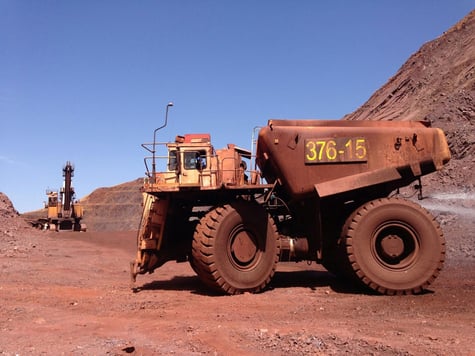
Haul trucks, loaders, excavators, and dozers require detailed pre-shift and periodic maintenance inspections. These cover engine performance, transmission function, brake system integrity, hydraulic pressure and leaks, tire condition and inflation, structural cracks or damage, lighting and safety systems, and operator controls responsiveness.
Document fluid levels, unusual noises, vibrations, or performance changes. Record hour meter readings to track service intervals. Inspect undercarriage components for wear and damage. Verify backup alarms, lights, and fire suppression systems function properly.

Fixed Processing Equipment
Crushers, conveyors, screens, and material handling systems demand specialized maintenance protocols. Inspection checklists should address bearing temperatures and lubrication, belt condition and tracking, chute wear and blockages, screen mesh integrity, motor amp draw and vibration, guarding and safety interlocks, and emergency stop functionality.
Track production throughput alongside maintenance observations to correlate equipment condition with operational performance.
Drilling Equipment
Drill rigs operate in particularly harsh conditions, requiring meticulous maintenance attention. Comprehensive checklists must cover drill string integrity, hydraulic system pressure and temperature, compressor operation and output, bit wear and replacement needs, mast and boom structural condition, stabilizer function, and dust suppression systems.
Comprehensive maintenance checklists cover all critical systems
to prevent equipment failures in mining operations.
Safety-critical items, including hoist cables, brake systems, and emergency shutoffs, require extra scrutiny. Document drilling parameters, including penetration rates and rotation speeds that may indicate developing equipment issues.
Auxiliary Equipment
Support equipment, including generators, pumps, ventilation fans, and lighting plants, enables primary production equipment to function safely. Maintenance checklists should verify fuel and coolant levels, battery condition and charging systems, hour meter and service interval tracking, exhaust system integrity, vibration and temperature readings, and safety shutdown systems.
Free Mining Equipment Maintenance Templates
These downloadable templates provide starting points for building comprehensive maintenance programs made for specific equipment and operational requirements.
Alpha TransForm Equipment Inspection App
Alpha TransForm provides a mobile equipment inspection app that can be adapted for mining equipment maintenance and compliance tracking. The customizable digital solution enables mining operators to create inspection forms, capture equipment conditions through photos and annotations, and generate instant reports from the field.
With offline capabilities for remote mining locations, the app streamlines equipment inspections, automates maintenance workflows, and ensures regulatory compliance, eliminating paper-based processes that slow operations and risk data loss.
MSHA Workplace Examination Templates
The U.S. Mine Safety and Health Administration provides sample templates and checklists to assist mining operators in complying with workplace examination rules for metal and nonmetal mines. These stakeholder-developed forms are provided as guidance to help operators develop and update surface mobile equipment safety programs, with templates covering best practices, equipment lists, and example programs tailored to each mine's unique conditions.
South Australia MAQOHSC Mining Inspection Templates
The Mines and Quarries Occupational Health and Safety Committee provides multiple inspection checklists, including templates for mobile crushing plant inspections with risk matrices and corrective action plans, as well as comprehensive site risk assessment checklists covering working conditions, hazardous manual tasks, plant equipment, and traffic management controls.
How to Conduct Equipment Maintenance Inspections
- Review Equipment History: Access previous inspection records, outstanding work orders, and recurring issues before beginning inspections. Understanding equipment history focuses attention on known problem areas and recent repairs.
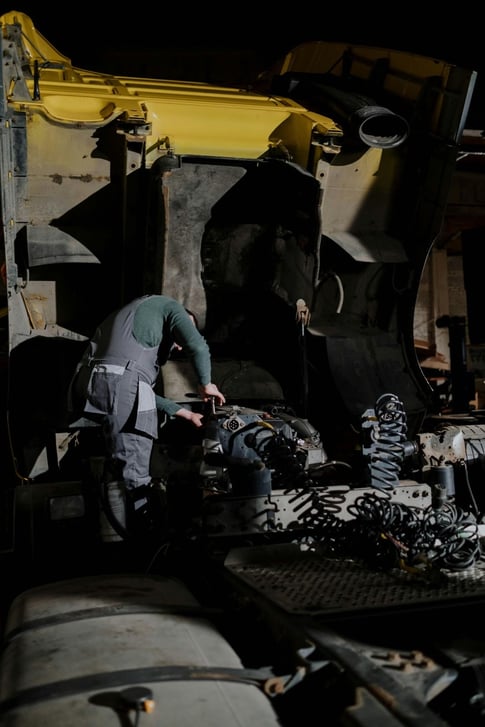
- Perform Visual Walk-Around: Conduct systematic visual inspections to check for fluid leaks, structural damage, loose components, missing guards, and obvious defects. Look for changes since the last inspection that indicate developing problems.
- Test Critical Systems: Verify brake function, steering response, hydraulic operation, electrical systems, safety devices, and backup alarms. Ensure all operator controls function smoothly without binding or excessive play.
- Document Findings Thoroughly: Record defects with specific locations, severity assessments, and photographic evidence. Note which issues require immediate attention versus scheduled repair. Include equipment hours, operator comments, and environmental conditions.
- Initiate Work Orders: Generate work orders for identified defects specifying priority levels, required parts, and estimated labor hours. Communicate urgent safety issues to supervision immediately rather than waiting for paperwork to be processed.
- Verify Corrective Actions: Follow up on completed repairs to confirm issues were resolved correctly, and equipment returned to service meets operational standards.
Why Digital Mining Equipment Maintenance Checklists Deliver Superior Results
Paper maintenance forms create hidden operational costs and compliance risks. Illegible handwriting obscures critical defect information. Lost forms create gaps in maintenance documentation during audits. Delayed reporting means defects worsen before repairs occur. Disconnected data prevents the identification of fleet-wide trends requiring systemic solutions.
Following structured inspection procedures ensures thorough
equipment evaluations and complete documentation.
Digital maintenance apps address these fundamental problems while adding capabilities that paper cannot match. Real-time defect reporting enables immediate work order generation and resource allocation. Photo documentation captures visual evidence that survives long after memory fades. Automatic timestamps and technician identification create auditable compliance trails. GPS location tracking verifies inspections occurred at designated equipment locations.
Cloud-based maintenance history provides instant access to complete equipment records supporting warranty claims, regulatory inquiries, and operational decisions. Advanced analytics identify recurring failure modes, predict component replacement timing, and optimize maintenance schedules based on actual usage patterns rather than generic intervals.
Streamline Mining Maintenance with Alpha TransForm
 Alpha TransForm addresses the practical realities facing mining maintenance departments where supervisors conduct equipment inspections in remote locations, technicians document repairs underground, and planners schedule maintenance across multiple shifts and sites.
The no-code app builder converts existing paper maintenance forms into mobile apps that work reliably offline, critical for underground mines and remote surface operations.
Works Reliably Anywhere, Offline
Mining operations cannot depend on consistent connectivity, as underground mines have no cell coverage. Remote pit locations lack reliable networks. Alpha TransForm's offline-first technology ensures maintenance apps function flawlessly regardless of connection status.
Alpha TransForm enables mining operations to digitize equipment maintenance checklists rapidly without coding expertise or IT delays.
Technicians capture photos of equipment damage, scan asset barcodes for identification, record GPS coordinates verifying inspection locations, collect digital signatures from supervisors, and complete detailed maintenance checklists, all while completely disconnected from networks.
Built for Rapid Deployment & Real-World Use
Maintenance supervisors create and deploy equipment inspection apps in hours using existing paper forms as templates. No coding skills required, no waiting for IT resources.
Alpha TransForm supports photo capture with annotations for documenting defects, barcode scanning for equipment tracking and parts identification, GPS location stamps for verification, timestamping to create audit trails, digital signatures for technician and supervisor validation, and conditional logic that adapts inspection questions based on equipment type and previous responses.
Triggers Action Automatically
Critical equipment issues demand immediate attention. Alpha TransForm's workflow capabilities automatically notify maintenance planners and supervisors when mining equipment defects are detected, generate work orders in maintenance management systems, escalate safety-critical findings to operations leadership, and update equipment status in asset tracking databases.
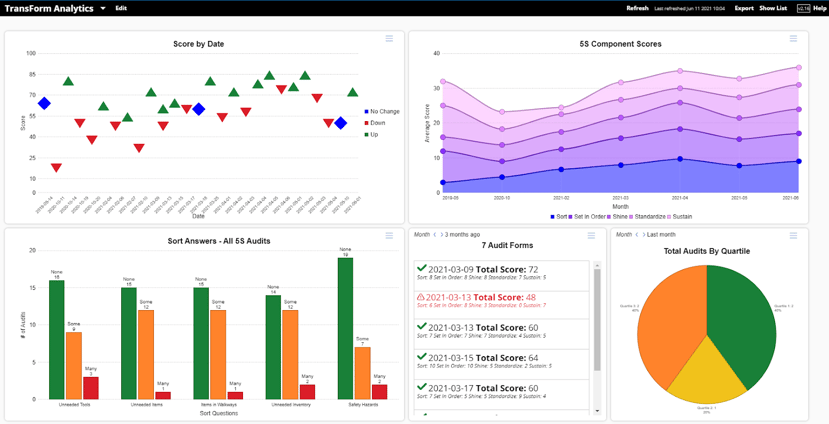
Maintenance data flows directly into dashboards showing fleet health, overdue inspections, and recurring problem areas. Integration with existing Enterprise Resource Planning (ERP) systems and Computerized Maintenance Management Systems (CMMS) ensures inspection findings drive operational decisions rather than sitting in filing cabinets.
Proven Results in Mining Operations
Mining maintenance teams using Alpha TransForm achieve measurable improvements quickly. Operations digitizing manual inspection processes report significant time savings per inspection, improved defect-detection rates, faster work-order response times, and better regulatory-compliance documentation.
The platform scales from single-site deployments to multinational mining operations with enterprise-grade security and flexible deployment options.
Frequently Asked Questions (FAQs)
What are the most critical components to inspect during mining equipment maintenance?
The most critical components include all safety systems, structural elements under high stress (booms, buckets, frames), high-pressure hydraulic systems, electrical systems in hazardous environments, and wear components affecting operational safety (tires, tracks, cutting edges, ground-engaging tools).
How often should mining equipment maintenance inspections be performed?
Mining regulations typically require pre-shift inspections before equipment enters service. Additional periodic inspections occur based on equipment type and manufacturer recommendations, generally ranging from weekly detailed inspections to monthly comprehensive evaluations.
Can I customize free maintenance checklist templates for my specific equipment?
Standard PDF templates provide limited customization through manual editing, creating version-control challenges and limiting scalability across operations. Mobile app builders like Alpha TransForm enable maintenance supervisors to digitize paper checklists rapidly, add conditional logic that adapts questions to equipment types, include photo requirements for specific inspection points, and modify forms without IT involvement.
What documentation is required for compliance with mining equipment maintenance?
Compliance documentation requirements vary by jurisdiction but generally include equipment identification (asset numbers, make, model), inspection dates and frequencies, inspector qualifications and signatures, detailed condition findings with severity assessments, corrective actions taken including parts replaced and labor hours, and verification that equipment meets safety standards before returning to service.
Why do mining operations choose Alpha TransForm for equipment maintenance?
Mining operations select Alpha TransForm because it addresses their specific challenges: reliable offline functionality for underground and remote locations, rapid deployment by maintenance supervisors without IT bottlenecks, comprehensive data capture including photos and GPS for compliance documentation, automatic work order generation reducing response time to critical defects, and proven ROI through faster inspections and better equipment reliability.
*Note: Pricing and/or product availability mentioned in this post are subject to change. Please check the retailer's website for current pricing and stock information before making a purchase.






Comment