
Discover how Industry 4.0 automates supply chains, replaces paper with digital workflows, and cuts costs. See real results and start modernizing today.
Key Takeaways
- Industry 4.0 is driving supply chains to replace manual, paper-based workflows with connected digital systems that deliver real-time visibility and faster decisions.
- Automation in the supply chain reduces errors, speeds up procurement and quality processes, and helps teams predict disruptions before they impact operations.
- Companies like Igloo, Bosch, and Sanofi have achieved measurable gains, from cutting factory disruptions by 25% to saving $145,000 in quality control costs.
- Modernizing supply chain operations does not require a massive IT overhaul; no-code platforms enable business users to digitize forms and workflows quickly.
- Alpha TransForm helps manufacturing and field teams go from paper to mobile apps in minutes, with offline capability, built-in dashboards, and zero IT dependency.
What the Digital Supply Chain Means for Your Business
Companies that have shifted from paper-driven supply chains to connected digital systems are already seeing the payoff: Bosch cut factory disruptions by 25% at its Blaichach plant, Sanofi aims to reduce report creation time by 70%, and Igloo saved $145,000 by digitizing quality control. In Industry 4.0, this transformation combines automation, mobile data capture, and analytics to give operations leaders real-time visibility, faster response times, and measurable cost savings.
The shift no longer requires a massive IT overhaul or an enterprise-scale budget. No-code platforms now let business users digitize forms and deploy mobile apps without dedicated IT resources, making supply chain modernization practical at any scale. This article breaks down how automation is reshaping supply chains, examines real-world results from leading manufacturers, and explains how platforms like Alpha TransForm make getting started fast and accessible.
|
Alpha TransForm: Digital Solutions to Collect, Analyze, and Act on Data Turn Paper Forms Into Mobile Apps in Minutes | No IT Team Required | Works Offline | Trusted by Manufacturing & Field Teams  Why Business Leaders Choose Alpha TransForm: ✓ Built-in custom dashboards and workflows to trigger business activity✓ Seamless integration with existing business systems ✓ Replace Excel with digital data collection and analysis ✓ Rapid digitization—build apps in days without IT bottlenecks ✓ Proven ROI with scalable start-small approach ✓ Trusted by manufacturing, construction, and healthcare leaders From Paper to Digital in 3 Steps 1. Upload your paper form or start from scratch2. Customize fields and logic as needed 3. Deploy to mobile devices and start collecting data instantly Stop losing time with paper processes. Start delivering business value today.
|
How Automation Transforms Supply Chain Operations

Automation is reshaping supply chains by replacing manual tasks with digital workflows, real-time visibility, and predictive insights.
Automation in Industry 4.0 goes well beyond robotic assembly lines. Across supply chains, it means eliminating repetitive manual tasks and replacing them with systems that execute faster, with fewer errors, and without requiring constant human oversight. Some ways this is achieved include:
Real-Time Visibility & Predictive Insights
One of the biggest wins from supply chain automation is visibility. When procurement data, inventory levels, and shipment statuses flow through connected digital systems instead of spreadsheets and phone calls, teams can spot problems early and act proactively. Automated alerts can flag discrepancies in purchase orders, predict low-stock situations, and trigger reorder workflows before a shortage hits the production line. According to a survey of 183 supply chain professionals, data analytics and real-time monitoring ranked as the top capabilities for organizations pursuing digital transformation.
From Paper Records to Digital Workflows
Many supply chain bottlenecks start with paper. Inspection reports filled out by hand, purchase orders printed and faxed, quality records filed in cabinets; these processes create delays, introduce errors, and make it nearly impossible to get a unified view of operations.
Modernization means converting these paper-based workflows into mobile digital forms and apps that capture data at the source, complete with timestamps, photos, GPS locations, and barcode scans. The data flows directly into dashboards and business systems, eliminating the re-keying step entirely and turning hours of administrative work into minutes.
How Leading Companies Are Digitizing Supply Chains
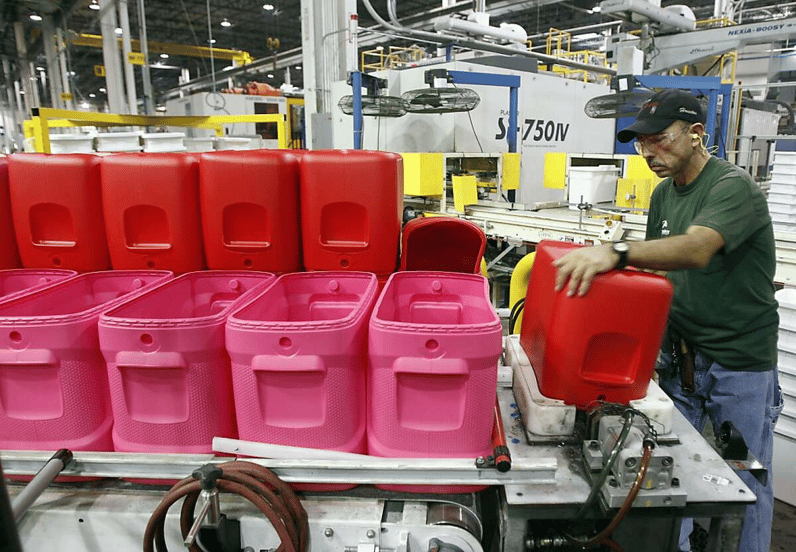
Companies like Igloo, Bosch, and Sanofi are digitizing supply chains to cut costs, boost accuracy, and eliminate paper-based workflows.
Understanding the business impact becomes clearer through companies that have already made this transition. Two examples stand out for the breadth and measurability of their results.
Igloo: Digitizing Quality Control with Alpha TransForm
Igloo, a Texas-based manufacturer of coolers and outdoor products, provides a practical example of how no-code platforms can deliver rapid supply chain improvements without a large-scale IT initiative. Faced with paper-based quality control processes that were slow, error-prone, and difficult to analyze, Igloo turned to our platform Alpha TransForm to digitize its quality control forms and workflows. By replacing manual paper forms with mobile apps that capture data directly on the production floor, Igloo eliminated the delays and inaccuracies associated with handwritten records and manual data re-entry. The results were significant: Igloo cut quality control costs by an estimated $145,000 while increasing data accuracy across its operations. The transition demonstrated that even mid-sized manufacturers can achieve measurable ROI quickly by starting with targeted digitization of high-impact processes, in this case, quality control, and scaling from there.
Bosch: Connected Manufacturing at Scale
Bosch has been a leading adopter and supplier of Industry 4.0 solutions for over a decade. Across its global manufacturing network, the company has connected more than 120,000 machines and 250,000 devices (as of 2021), including cameras, sensors, and robots, to collect and act on real-time production data. At Bosch's Blaichach plant in Germany, this connected infrastructure reduced production disruptions by 25%. Bosch set a target to run over 85% of its global purchasing volume through digital cloud platforms, replacing manual procurement processes with automated, transparent workflows. The result has been faster purchasing cycles, better supplier collaboration, and significantly lower administrative overhead.
Sanofi: From Paper to Paperless Factories
Pharmaceutical manufacturer Sanofi offers a clear example of paper-to-digital modernization. The company has been moving from paper records to Electronic Batch Records across its manufacturing network, eliminating manual documentation that once slowed quality reviews and compliance processes. By automating report creation with digital tools, Sanofi aims to reduce creation time by 70% for its 3,500 annual Product Quality Reports. The company's AI-powered supply chain platform can now predict 80% of inventory risks, enabling teams to take corrective action before shortages affect production. Sanofi's newest facilities in France and Singapore operate as fully digitized, paperless factories, a proof point that the shift from manual to digital delivers both quality improvements and operational speed.
The Role of No-Code Platforms in Supply Chain Modernization
Not every organization has the budget or timeline for a multimillion-dollar digital overhaul. That is where no-code platforms play a critical role. These tools allow business users to build mobile apps that replace paper forms, automate data collection, and feed information into dashboards and existing business systems.
For operations teams managing inspections, inventory counts, receiving logs, Gemba walks, or 5S audits, no-code platforms enable digitizing a single form, testing it in the field, and scaling across facilities, all without waiting for IT backlogs. The key requirements are offline capability (because warehouses, oil fields, and factory floors often lack reliable connectivity), built-in mobile features like barcode scanning and photo capture, and integration with the systems you already use.
Why Choose Alpha TransForm for Supply Chain Digitization
Alpha TransForm turns paper supply chain forms into powerful mobile apps in minutes with no code and no IT bottleneck.
We built Alpha TransForm specifically for the challenges operations teams face every day. Our no-code platform lets business users turn paper forms into powerful mobile apps in minutes and deploy them to field teams without waiting on IT.
What makes Alpha TransForm different is that it was designed for demanding environments. Our apps work fully offline in warehouses, distribution centers, remote facilities, and other locations with unreliable connectivity. When a signal returns, data syncs automatically. Every app can leverage built-in features such as photo capture, barcode scanning, GPS tagging, timestamps, electronic signatures, and conditional logic—the kind of functionality supply chain teams actually need on the ground.
Our customers in manufacturing, construction, healthcare, and fleet management consistently achieve rapid ROI by starting small, digitizing a few forms, proving the value, and scaling from there. There is no lengthy implementation cycle and no IT bottleneck to slow you down. You can explore ready-to-use templates for inspections, equipment checks, and inventory tracking at our sample apps library.
FAQs
What is a digital supply chain model in Industry 4.0?
How does automation reduce supply chain errors?
Can small and mid-sized businesses afford supply chain digitization?
What supply chain processes benefit most from going paperless?
What makes Alpha TransForm a strong fit for supply chain operations?
*Note: Alpha TransForm is a no-code app builder developed by Alpha Software. Product features, availability, pricing, and results referenced are for informational purposes only and subject to change; actual capabilities and outcomes may vary based on configuration and use case. To confirm current offerings and pricing, talk to a Solutions Consultant.






Comment